









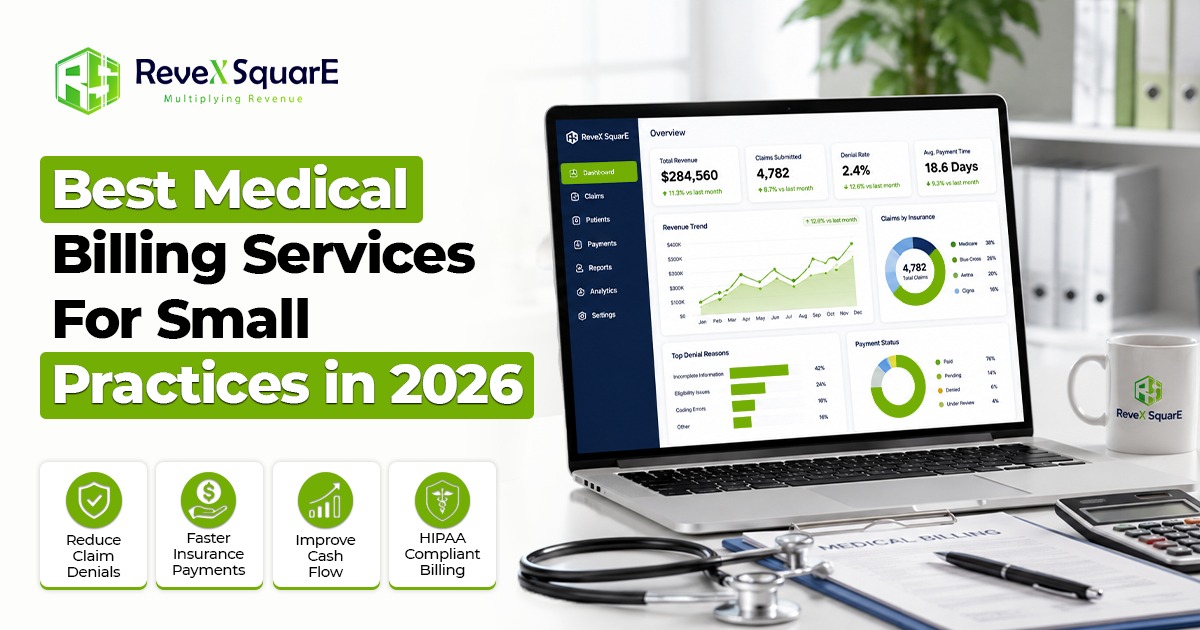
Running a small medical practice means wearing a dozen hats at once physician, manager, HR department, and sometimes even the person chasing down unpaid claims. If you’ve ever spent an evening untangling a denied claim instead of spending time with your family, you already know why so many small practices are turning to professional medical billing services and medical coding in 2026.Many independent healthcare practices now rely on medical billing services for small practices to reduce administrative burden and improve revenue performance.
This guide breaks down what to look for, what to expect, and how the right billing partner can change the financial health of your practice without the jargon.
Why Small Practices Are Turning to Medical Billing Services
Small practices don’t have the luxury of a full in-house billing department. One person often handles scheduling, coding updates, claims, and patient calls and when that person is out sick or overwhelmed, revenue slows down immediately.
That’s exactly the gap that medical billing services are built to fill. Instead of hiring, training, and managing an internal team, practices can outsource the entire revenue cycle to specialists who do this work every single day. The result is fewer errors, faster reimbursements, and a lot less administrative stress.
In 2026, this shift has accelerated. Rising claim denial rates, tighter payer requirements, and constant coding updates have made billing more complex than ever and more time-consuming to manage internally.
Modern billing solutions for physicians help eliminate claim errors, accelerate reimbursements, and improve operational efficiency.
In-House Billing vs. Outsourced Medical Billing for Small Practices
| Billing Area | In-House Billing | Outsourced Medical Billing |
|---|---|---|
| Staffing | Practice hires and manages staff | Dedicated billing support |
| Training | Practice handles ongoing training | Managed by billing team |
| Claim Follow-Up | Depends on internal resources | Dedicated workflow |
| Denial Management | Can be time-consuming | Specialized follow-up |
| A/R Management | Requires consistent staff attention | Ongoing claim follow-up |
| Scalability | May require additional hiring | Can support practice growth |
The right choice depends on your practice, internal resources, specialty, and billing requirements. However, many small practices choose outsourced support when maintaining a complete internal billing operation becomes too time-consuming or expensive.
Medical Billing Support for Different Practice Types
Different specialties face different billing requirements. A billing process that works for one practice may not be suitable for another.
Revex Square supports healthcare practices across multiple specialties and can provide billing workflows based on the needs of the practice.
Behavioral Health Services For Small Business
Behavioral health billing can involve ongoing treatment, payer-specific requirements, and detailed documentation.
Cardiology Services For Small Business
Cardiology billing may involve specialized procedures, diagnostic services, and complex coding requirements.
Orthopedic Services For Small Business
Orthopedic practices may manage procedures, imaging, therapy, and other services that require accurate billing workflows.
Physical Therapy Services For Small Business
Physical therapy billing often requires consistent documentation, coding accuracy, and claim management.
What Great Medical Billing Services Actually Include
Not all providers offer the same scope of work, so it helps to know what a strong package looks like. The best medical billing services typically cover:
- Claims submission and tracking — ensuring claims go out clean the first time
- Denial management — identifying claim issues, implementing claim denial prevention strategies, and resubmitting claims quickly.
- Patient billing and statements clear, accurate invoices that reduce confusion
- Eligibility verification — confirming coverage before the appointment happens
- Accounts receivable follow-up chasing down aging claims so revenue doesn’t stall
- Compliance monitoring — staying current with payer rules and coding changes
- Credentialing services— Ensures providers are properly enrolled with insurance networks, allowing practices to receive timely reimbursements without billing delays.
- Behavioral health billing services— Helps mental health practices manage complex billing requirements, improve claim accuracy, and maximize reimbursement rates.
When a provider only handles part of this cycle, gaps appear and gaps are where revenue quietly disappears. That’s why practices researching medical billing services should ask specifically what’s included before signing anything.
Comprehensive healthcare billing services combine insurance verification, medical coding services, medical claims processing, and denial resolution under one streamlined workflow.
Effective accounts receivable management and accurate claims submission are essential for maintaining healthy cash flow and reducing revenue leakage.
Core Services Included in Medical Billing Services
| Service | Purpose | Benefit |
|---|---|---|
| Eligibility Verification | Verify coverage before visits | Fewer claim denials |
| Medical Coding | Accurate CPT & ICD coding | Higher claim acceptance |
| Claims Submission | Electronic claim filing | Faster reimbursements |
| Denial Management | Resolve rejected claims | Revenue recovery |
| Accounts Receivable Follow-Up | Collect unpaid balances | Improved cash flow |
| Patient Billing | Statements & payment support | Better patient experience |
Industry Insight
When evaluating different medical billing services, it’s helpful to compare providers that offer complete revenue cycle management, transparent reporting, and specialty-specific expertise. Companies such as Revex Square focus on helping healthcare practices streamline billing operations, reduce claim denials, and improve reimbursement rates through customized billing solutions. Reviewing service offerings, reporting capabilities, and client support structures can help practices identify the best fit for their needs.
You can learn more about their healthcare revenue cycle solutions at Revex Square.

How Much Do Medical Billing Services Cost?
Pricing usually falls into one of two models: a flat monthly fee or a percentage of monthly collections, commonly somewhere between 3% and 8%, depending on specialty and claim volume.
For a small practice collecting around $100,000 a month, that might mean paying $3,000–$8,000 in service fees but compare that to the cost of a full-time in-house biller, which often runs $40,000–$60,000 a year in salary alone, plus benefits, software, and training. For most small practices, outsourced medical billing services end up being the more cost-effective option, especially once you factor in reduced denials and faster payments.
It’s worth asking any provider for a transparent, all-inclusive rate. Hidden fees for statements, eligibility checks, or “extra” services are a common red flag. Many practices view outsourced medical billing services as an investment because they support reimbursement optimization and reduce staffing costs.
Signs You Need to Switch (or Start Using) Medical Billing Services
If any of the following sound familiar, it may be time to look into professional support:
- Claims are getting denied and nobody has time to appeal them
- Accounts receivable is aging past 90 or 120 days
- Patient balances are piling up with no consistent follow-up
- You’re unsure whether you’re actually being paid correctly by payers
- Billing errors are creating compliance risk
These issues rarely fix themselves they tend to compound. The longer claims sit unresolved, the harder they become to collect. This is one of the biggest reasons practices decide to bring in dedicated medical billing services rather than trying to patch the problem internally.
Warning Signs Your Practice Needs Billing Support
| Challenge | Impact on Practice |
|---|---|
| Rising Claim Denials | Revenue Loss |
| Aging A/R Over 90 Days | Cash Flow Problems |
| Frequent Coding Errors | Compliance Risk |
| Slow Insurance Payments | Delayed Revenue |
| Staff Burnout | Reduced Productivity |
| Patient Billing Complaints | Poor Experience |
What Should Small Practices Look for in a Medical Billing Company?
Choosing a medical billing company is not only about finding the lowest price. The right partner should understand your practice’s workflow and provide a clear process for managing claims.
Consider the following factors:
Specialty Experience
Your billing requirements may vary based on your specialty. Ask whether the billing team has experience with practices similar to yours.
Clear Communication
You should know who is managing your account and how billing questions or problems will be handled.
Transparent Reporting
A practice should have access to meaningful information about billing performance, outstanding claims, and areas that require attention.
Denial Management Process
Ask how denied claims are reviewed and what process is used to identify recurring issues.
Accounts Receivable Follow-Up
Find out how often unpaid claims are reviewed and what happens when claims remain unresolved.
Compliance and Data Security
Any company handling healthcare billing should take patient data protection and HIPAA requirements seriously.
What to Look for When Choosing a Provider
Not every billing company is the same, so a little due diligence goes a long way. Here’s what separates dependable medical billing services from the rest:
Specialty Experience
Billing for cardiology, mental health, and physical therapy all involve different codes and payer rules. A provider familiar with your specialty will submit cleaner claims from day one.
Transparent Reporting
You should always be able to see claim status, collections, and denial trends not just a monthly invoice.
HIPAA Compliance
HIPPA Patient data security isn’t optional. Any provider handling billing should be able to clearly explain how they protect sensitive health information. A provider offering HIPAA compliant billing should also maintain strict healthcare compliance standards and secure patient data protocols.
No Long-Term Lock-In
Reputable companies earn your business month after month rather than trapping you in lengthy contracts.
Real Client Feedback
Look for verified reviews and testimonials from practices similar in size to yours—not just polished marketing claims.
The best medical billing company will provide transparent reporting, specialty expertise, and proactive revenue cycle support.
The Real Benefit: Time Back in Your Day
Beyond the financial upside, the biggest thing small practices gain from outsourcing is time. Physicians and office managers get back the hours they used to spend on hold with insurance companies or manually reworking rejected claims.
That time goes back into patient care, which is ultimately why most people got into healthcare in the first place. Medical billing services exist to handle the paperwork so you don’t have to choose between running your practice and treating your patients.
Common Myths That Hold Practices Back
A lot of small practice owners hesitate to outsource because of misconceptions that don’t hold up in 2026.
“Outsourcing Means Losing Control”
In reality, a good partner gives you more visibility, not less through dashboards, regular reports, and direct access to your account manager.
“It’s Only Worth It for Large Practices”
Small practices often see the biggest relative impact, since a single missed claim or slow follow-up hits a smaller revenue base much harder.
“All Providers Are Basically the Same”
Pricing structures, specialty knowledge, and communication styles vary widely. Two companies charging the same percentage rate can deliver very different results depending on how proactively they manage denials and follow-ups.
Understanding these myths helps practice owners approach the decision with realistic expectations instead of outdated assumptions.
How Medical Billing Services Improve Revenue Cycle Performance
Medical billing services do much more than submit claims. They strengthen every stage of the revenue cycle, from patient eligibility verification to payment posting and denial resolution. By reducing administrative bottlenecks and improving claim accuracy, practices can achieve healthier cash flow, fewer write-offs, and more predictable revenue.
- revenue cycle management
- reimbursement optimization
- clean claim rate
- healthcare financial management
- payer compliance
FAQs
How Long Does Onboarding Usually Take?
Most transitions take two to four weeks, depending on how much historical data needs to be migrated and how many payers are involved.
Will My Patients Notice a Difference?
Ideally, only a positive one clearer statements, fewer billing errors, and faster answers to their questions.
Can I Switch Providers If It Doesn’t Work Out?
Yes, as long as there’s no restrictive long-term contract. This is why it’s worth confirming contract terms before signing.
What are medical billing services?
Medical billing services manage claim submission, payment posting, denial management, and reimbursement processes for healthcare providers.
How do medical billing services help small practices?
They reduce administrative workload, improve claim accuracy, and increase collections while allowing providers to focus on patient care.
Are outsourced medical billing services cost-effective?
Yes. Most small practices spend less on outsourcing than maintaining a full in-house billing department.
What is included in medical billing services?
Services typically include coding support, claims processing, eligibility verification, denial management, and accounts receivable follow-up.
How much do medical billing services cost?
Most providers charge between 3% and 8% of monthly collections, depending on specialty and claim volume.
Can medical billing services reduce claim denials?
Yes. Experienced billing teams identify errors before submission and actively manage denied claims.
Are medical billing services HIPAA compliant?
Reputable providers follow HIPAA regulations and use secure systems to protect patient information.
How long does it take to switch billing providers?
Most transitions are completed within two to four weeks, depending on the size of the practice and data migration requirements.
Do medical billing services work with all specialties?
Many billing companies support multiple specialties, including cardiology, behavioral health, orthopedics, pediatrics, and urgent care.
How do I choose the best medical billing services?
Look for specialty expertise, transparent reporting, strong denial management processes, HIPAA compliance, and positive client reviews.
Conclusion
Choosing between managing billing in-house or outsourcing to professional medical billing services isn’t just a financial decision it’s a decision about where you want to spend your time and energy as a practice owner. For most small practices in 2026, the math, the compliance requirements, and the sheer administrative load make outsourcing the more sustainable path forward.
If you’re evaluating your options, start by asking potential partners for a clear breakdown of their services, pricing, and reporting process. A transparent answer to those questions tells you a lot about how they’ll handle your revenue cycle long-term.
Considering a switch? A free billing audit is often the easiest way to see exactly where your current process is losing revenue before committing to any change.
Schedule a free billing audit with Revex Square and discover where your practice may be losing revenue.
Contact us for furthur Details