









RCM process improvements don’t just make operations smoother; they help healthcare organizations improve financial performance, reduce administrative waste, and create a more predictable revenue cycle. Revenue Cycle Management (RCM) covers every financial step involved in patient care, from appointment scheduling and insurance verification to claim submission, payment collection, and denial follow-up.
When these steps are disconnected or handled manually, even small mistakes can lead to rejected claims, delayed reimbursements, and unnecessary administrative costs. Improving RCM processes helps practices identify problems earlier, reduce rework, and collect payments more efficiently.
Healthcare organizations that optimize their RCM processes can work toward reducing claim denials, accelerating reimbursement cycles, increasing net collections, and improving clean claim rates.
Healthcare organizations that optimize their RCM processes aim to achieve improvements such as:
- Fewer claim denials: Accurate patient information, coding, and claim validation can help prevent avoidable denials.
- Faster reimbursement cycles: Timely submissions and consistent follow-up can reduce unnecessary payment delays.
- Higher net collections: Better claim accuracy and patient payment processes can help practices collect more of the revenue they earn.
- Improved clean claim rates: Standardized workflows can reduce errors that cause claims to be rejected or returned for correction.
Actual results vary by specialty, payer mix, existing workflows, and the quality of implementation. In a landscape where margins are tightening, even a 3–5% improvement in collections can translate into substantial annual revenue for a mid-sized practice, depending on its existing collection volume and operating costs.
Here are five RCM process improvements that can deliver measurable results and help boost profitability.
Transforming the Medical Billing Experiences with RCM Process Improvements
Transforming the experience of Revenue Cycle Management (RCM) in medical billing means changing medical billing from an outdated, manual, reactive process into a smarter system that identifies problems before they affect payments.
Instead of focusing only on sending insurance claims, modern RCM manages the entire patient-to-payment process. It begins when a patient schedules an appointment and continues through registration, insurance verification, coding, claim submission, payment posting, denial management, and final balance resolution.
Each stage depends on the accuracy of the previous one. For example, incorrect insurance information collected during registration can lead to eligibility problems, claim rejections, and additional staff work. Similarly, incomplete clinical documentation can create coding errors that delay reimbursement.
An integrated RCM workflow connects clinical, administrative, and financial information to help teams work more efficiently. It also gives practice managers better visibility into outstanding claims, payer response times, collection performance, and recurring billing problems.
Healthcare organizations can improve their RCM processes by standardizing procedures, assigning clear responsibilities, and reviewing performance data regularly. These steps help identify bottlenecks and make it easier to determine whether a problem originates during registration, coding, submission, or follow-up.
The goal is not simply to process claims faster. It is to create a reliable workflow that reduces avoidable errors, improves cash flow, supports compliance, and gives staff more time to focus on patients.
Keep Up with the Latest Technology Trends
To stay current with the latest technology in Revenue Cycle Management (RCM), healthcare organizations should evaluate how artificial intelligence, automation, and data analytics can improve existing workflows. Technology is most effective when it addresses a specific operational problem rather than being introduced without a clear purpose.
For example, a practice experiencing frequent eligibility-related denials may benefit more from automated insurance verification than from investing in a complex analytics platform. Organizations should first identify their most expensive bottlenecks and then choose tools that address those needs.
Core technologies to adopt: –
- Artificial Intelligence (AI): AI-powered tools can help flag potential coding inconsistencies, identify unusual claim patterns, and prioritize accounts that may require additional review. Human oversight remains important, particularly for coding decisions, clinical documentation, and compliance-sensitive activities.
- Automation Tools: Workflow automation can handle repetitive tasks such as eligibility checks, claim-status inquiries, payment posting, and follow-up reminders. Automating suitable tasks reduces manual data entry and allows billing staff to concentrate on exceptions that require judgment.
- Data Analytics: RCM dashboards can track denial rates, days in accounts receivable, clean claim rates, reimbursement timelines, and collection performance. Reviewing these metrics helps managers identify recurring problems and determine whether process changes are producing measurable improvements.
- Cloud-Based RCM Systems: Cloud-based platforms can support access to current billing information across authorized locations and simplify system maintenance. Practices should evaluate access controls, data protection, vendor security practices, and integration capabilities before choosing a platform.
- Patient Portals & Digital Payments: Online portals can allow patients to review statements, understand balances, and make payments through convenient channels. Clear billing information and accessible payment options can reduce confusion and make it easier for patients to resolve outstanding balances.
Technology selection should also account for staff training, implementation costs, compatibility with existing electronic health record (EHR) systems, and the time required to transition from older workflows. A well-planned rollout with clear performance targets is more useful than adopting several tools without measuring their impact.
Read More: Why Outsourcing Medical Billing Helps Healthcare Providers Focus on Patient Care
Healthcare providers can use the official CMS electronic billing and EDI resources to learn about Medicare electronic claim submission, eligibility data transactions, and applicable billing requirements. Reviewing official guidance can help billing teams understand electronic transaction processes and keep their procedures aligned with relevant payer requirements.
Confirm patient eligibility and benefits at the start.
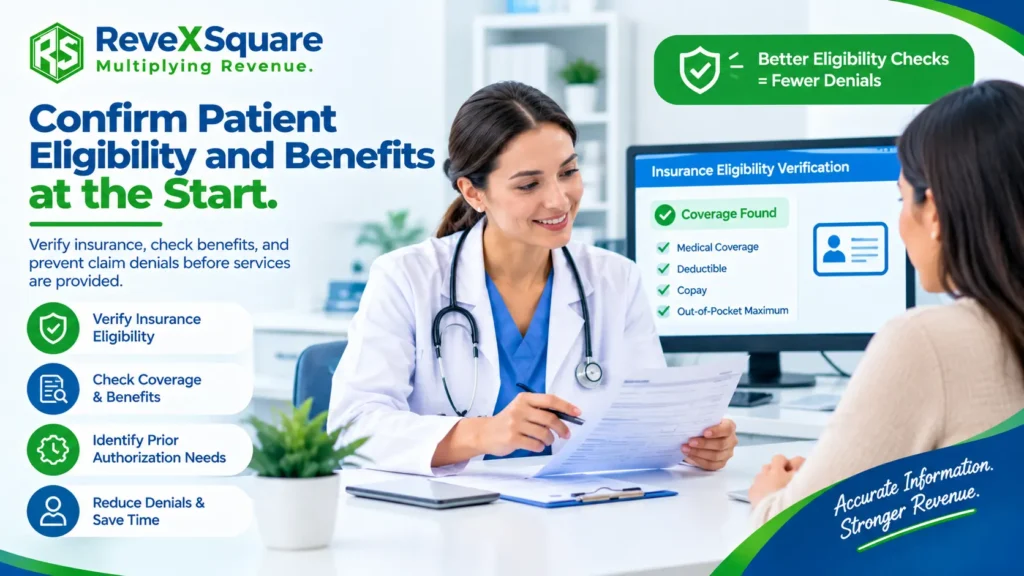
Patient eligibility verification is one of the most important early steps in the revenue cycle. Incorrect insurance information, inactive coverage, and misunderstandings about plan benefits can lead to claim denials, unexpected patient balances, and avoidable follow-up work.
Checking eligibility before a scheduled appointment gives staff an opportunity to identify coverage issues while there is still time to contact the patient or insurance company. It also helps the practice understand whether additional information, a referral, or prior authorization may be needed.
How to address it:
- Use real-time eligibility verification tools that are integrated with your EHR or billing system whenever possible.
- Verify active coverage for the date of service rather than relying only on information collected during an earlier visit.
- Confirm the patient’s name, date of birth, member ID, group number, and insurance details.
- Review deductibles, copayments, coinsurance, covered services, and visit limitations when the information is available.
- Identify services that may require prior authorization or a referral, particularly for higher-cost procedures and certain specialty services.
- Record verification results in the patient’s account so authorized staff can review the information later.
- Establish a process for resolving eligibility discrepancies before the appointment whenever possible.
- Recheck coverage when patients report an insurance change or when a new plan becomes effective.
Eligibility verification does not guarantee that a claim will be paid. Coverage rules, medical necessity, coding, documentation, authorization requirements, and payer policies can still affect reimbursement. However, verifying available information early helps reduce preventable errors and improves communication with patients about potential financial responsibilities.
Practices should monitor eligibility-related denials and compare them over time. If the same errors continue to appear, managers can review staff training, verification timing, system integration, and the process for documenting insurance changes.
Patient-First Billing Approaches
Patient-first billing in RCM focuses on making financial interactions clear, accurate, and manageable for patients while helping providers collect payments efficiently. As patients face deductibles, copayments, coinsurance, and other out-of-pocket expenses, confusing statements and unexpected balances can create frustration and delay payments.
A patient-first approach begins with clear communication before, during, and after care. When possible, staff should explain expected costs before services are provided, clarify what insurance information is available, and tell patients when an estimate may change because of coverage decisions or additional services.
Practical ways to improve patient billing include the following:

- Provide upfront cost estimates: Share available estimates before scheduled services and explain that the final amount may depend on insurance processing and the care delivered.
- Use clear statements: Present charges, insurance payments, adjustments, and remaining balances in language patients can understand.
- Offer convenient payment options: Online portals, secure payment links, and other accessible methods can make it easier to settle balances.
- Explain financial policies: Communicate payment deadlines, installment options, and procedures for questions or disputes before confusion develops.
- Train front-desk staff: Equip staff to explain basic billing procedures and direct complex insurance questions to the appropriate team.
- Follow up respectfully: Use consistent reminders that help patients understand what they owe and how to resolve outstanding balances.
- Provide accessible support: Give patients a clear way to ask questions about statements, payment plans, or insurance adjustments.
Practices should avoid presenting estimates as guaranteed final prices. Actual patient responsibility may change after the insurer processes a claim, applies contractual adjustments, or determines coverage. Clear explanations of these possibilities can reduce misunderstandings and support patient trust.
Patient-first billing can also benefit the practice financially. When patients understand their statements and have convenient ways to pay, staff may spend less time resolving basic billing questions and more time handling complex accounts. Practices can evaluate the impact by tracking patient payment turnaround, outstanding patient balances, billing-related inquiries, and patient feedback.
Prioritize claim denial reviews in rcm
Claim denials can interrupt cash flow and create additional work for billing teams. When denied claims are handled without a clear priority system, staff may spend valuable time on low-value accounts while higher-value claims approach filing or appeal deadlines.
To improve revenue recovery, healthcare organizations should assess denials according to financial value, the reason for denial, the likelihood of successful correction or appeal, and the time remaining before applicable deadlines. This approach helps teams direct attention to accounts where timely action can make the greatest difference.
A structured denial review process should distinguish between claims that can be corrected and resubmitted, claims that require additional documentation, and claims that need a formal appeal. It should also identify denials that may be valid under the payer’s coverage or payment rules so staff do not spend resources pursuing unsupported recoveries.
Important elements of an effective denial review process include:
- Categorize denial reasons: Group denials by issues such as eligibility, coding, missing information, authorization, timely filing, and medical necessity.
- Prioritize high-value claims: Review the financial impact alongside filing deadlines and the likelihood of recovering payment.
- Assign clear ownership: Make sure each denial has a responsible team member and a documented next action.
- Track deadlines: Maintain a reliable schedule for corrected claims, appeals, and payer follow-ups based on applicable requirements.
- Investigate root causes: Determine whether repeated denials originate from registration, documentation, coding, authorization, or submission processes.
- Measure recovery performance: Track recovered amounts, successful appeals, unresolved denials, and the time required to resolve accounts.
Denial management should not stop once an individual claim has been resolved. The information collected from denials can help organizations identify patterns and prevent the same errors from affecting future claims. For example, repeated authorization denials may indicate that staff need a clearer pre-service authorization checklist.
Regular denial review meetings can help billing, coding, clinical, and administrative teams share findings and agree on corrective actions. Over time, this turns denial management from a reactive task into a continuous improvement process.
Steps to Reduce Claims Denial Rates in Your Medical Practice:
Reducing claim denials requires consistent attention to the entire revenue cycle. Although individual claims may be denied for different reasons, many recurring problems can be reduced through accurate patient data, complete documentation, appropriate coding, timely submission, and a standardized follow-up process.
The following steps help practices identify weaknesses in their existing workflows and develop practical improvements.
1. Streamline the Revenue Cycle
A streamlined revenue cycle creates a consistent process from patient registration through final payment and any necessary appeals. When staff members follow different procedures or rely on disconnected systems, important information can be missed and claims may be delayed.
To improve consistency:
- Map the steps involved in registration, eligibility verification, charge entry, coding, claim submission, payment posting, and follow-up.
- Define who is responsible for each step and how incomplete information should be escalated.
- Use standardized checklists for common tasks and high-risk services.
- Reduce duplicate data entry where secure system integrations are available.
- Review unresolved claims regularly so accounts do not remain unattended.
- Establish clear procedures for correcting errors and documenting actions taken.
Managers should look for bottlenecks that repeatedly slow down claim processing. For example, if claims frequently remain unsubmitted because clinical documentation is incomplete, the practice may need a clearer handoff between clinical staff and billing staff.
2. Verify Insurance and Patient Information
Accurate patient and insurance information is essential for successful claim submission. A misspelled name, incorrect member ID, outdated policy, or inaccurate date of birth can prevent a payer from matching a claim to the correct member.
Practices should verify key details at registration and confirm them again when the patient reports a change in coverage. Staff should also check eligibility for the relevant date of service and document any discrepancies that require follow-up.
Recommended actions include:
- Confirm the patient’s demographic details against available records.
- Check member IDs, policy numbers, and payer information carefully.
- Verify coverage and benefit information before scheduled services.
- Identify coordination-of-benefits issues when a patient has multiple insurance plans.
- Update the billing system promptly when insurance details change.
- Train registration staff to recognize incomplete or inconsistent information.
Tracking denials related to registration and eligibility can reveal whether additional training or workflow changes are needed.
3. Ensure Documentation Specificity
Complete and accurate clinical documentation supports appropriate coding and helps demonstrate that billed services are consistent with the care provided. Missing notes, unclear descriptions, incomplete records, or inconsistencies between documentation and submitted codes may lead to requests for additional information or claim denials.
Healthcare organizations should establish documentation standards appropriate to their specialties and payer requirements. Clinical staff should understand what information needs to be recorded, while coding and billing teams should have a process for requesting clarification when documentation is insufficient.
Key actions include:
- Ensure clinical notes accurately reflect the services performed.
- Confirm that documentation supports the codes and units reported.
- Use specialty-appropriate templates without relying on generic text that may omit important details.
- Resolve documentation queries promptly before claim submission when possible.
- Review coding changes and payer-specific requirements regularly.
- Provide ongoing education on common documentation and coding errors.
Documentation improvements should support accurate reporting rather than encourage unnecessary or unsupported coding. When staff identify recurring problems, targeted training and clearer documentation workflows can reduce avoidable rework.
4. Track Denial Trends
Tracking denial trends helps a practice understand which issues are affecting reimbursement most often. Looking at individual claims in isolation may resolve immediate problems, but analyzing patterns can reveal the underlying process failures that need to be corrected.
A useful denial report should organize claims by reason, payer, specialty, service type, financial value, and responsible workflow where appropriate. This allows managers to identify whether a particular payer, service, or internal process is generating an unusual volume of denials.
Practices can improve denial tracking by:
- Reviewing denial reasons on a regular schedule.
- Comparing denial rates across payers and service categories.
- Identifying the most common reasons for denied or rejected claims.
- Measuring the financial value of unresolved denials.
- Assigning corrective actions to the teams responsible for the underlying process.
- Checking whether denial rates improve after changes are implemented.
For example, a recurring pattern of authorization-related denials may indicate that authorization checks are happening too late. A rise in coding-related denials may point to documentation gaps, outdated coding guidance, or a need for targeted staff education.
The purpose of denial analytics is to turn billing data into practical decisions. Practices should review trends regularly and confirm that corrective actions are reducing the problems identified.
5. Standardize the Appeals Process
A standardized appeals process helps healthcare organizations respond to denials consistently and within the deadlines set by the applicable payer. Without a clear process, staff may miss submission windows, overlook required documents, or fail to explain why a claim should be reconsidered.
The first step is to understand the denial reason and determine whether the claim requires correction, additional documentation, reconsideration, or a formal appeal. The appropriate action depends on the payer’s rules and the circumstances of the claim.
To improve the appeals process:
- Create a documented workflow for reviewing denial notices.
- Record the denial reason, applicable deadline, and required next action.
- Gather supporting documentation relevant to the issue.
- Assign responsibility for preparing, submitting, and tracking each appeal.
- Maintain records of correspondence and submission confirmations.
- Follow up with the payer when a response is overdue.
- Review appeal outcomes to identify recurring issues and opportunities for improvement.
Not every denial should be appealed. Staff should evaluate whether the claim is supported by documentation and whether the payer’s rules provide a reasonable basis for correction or appeal. This helps organizations focus resources on appropriate cases.
A well-managed appeals process can improve visibility into unresolved revenue and help prevent avoidable losses caused by missed deadlines or incomplete submissions.
Conclusion
In today’s increasingly complex healthcare landscape, Revenue Cycle Management (RCM) is more than an administrative function; it is an important part of maintaining financial stability and operational efficiency. By transforming the medical billing experience, adopting suitable technology, verifying patient eligibility early, improving patient billing communication, and prioritizing claim denial reviews, healthcare organizations can address common revenue cycle weaknesses.
These improvements work best when they are implemented as connected processes rather than isolated changes. Accurate registration supports eligibility verification, complete documentation supports appropriate coding, clean claims reduce avoidable rework, and effective denial tracking helps prevent repeated errors.
Organizations should also measure results consistently. Metrics such as clean claim rate, denial rate, days in accounts receivable, net collection rate, and appeal recovery can help managers determine whether new workflows are improving performance. Results will differ depending on payer requirements, specialty, claim volume, and the practice’s starting point.
Ultimately, RCM optimization means being proactive rather than reactive: identifying problems early, assigning clear responsibilities, and using reliable data to guide decisions. Even incremental improvements can have a meaningful financial impact when they reduce rework, shorten payment delays, and help the practice collect revenue it has legitimately earned.
Frequently Asked Questions
What are RCM process improvements?
RCM process improvements are changes to the workflows used to manage patient registration, insurance verification, coding, claim submission, payment posting, denial follow-up, and patient collections. The goal is to reduce errors, improve efficiency, and support more predictable reimbursement.
How can RCM improvements increase profitability?
RCM improvements can help increase profitability by reducing avoidable claim denials, limiting manual rework, improving follow-up, and collecting payments more efficiently. The financial impact depends on the organization’s current processes, payer mix, and implementation costs.
Which RCM metrics should healthcare practices track?
Common metrics include clean claim rate, denial rate, days in accounts receivable, net collection rate, first-pass resolution rate, and denial recovery rate. Practices should define each metric consistently and review results over time.
How does insurance eligibility verification reduce denials?
Eligibility verification helps identify inactive coverage, incorrect member details, and potential benefit or authorization issues before services are provided. It cannot guarantee payment, but it can reduce preventable errors and give staff time to resolve discrepancies.
Can technology completely eliminate claim denials?
No. Automation and analytics can help detect errors and improve workflows, but denials may still occur because of coverage rules, medical necessity, documentation, coding, authorization, and payer-specific requirements. Human review and ongoing process improvement remain important.