









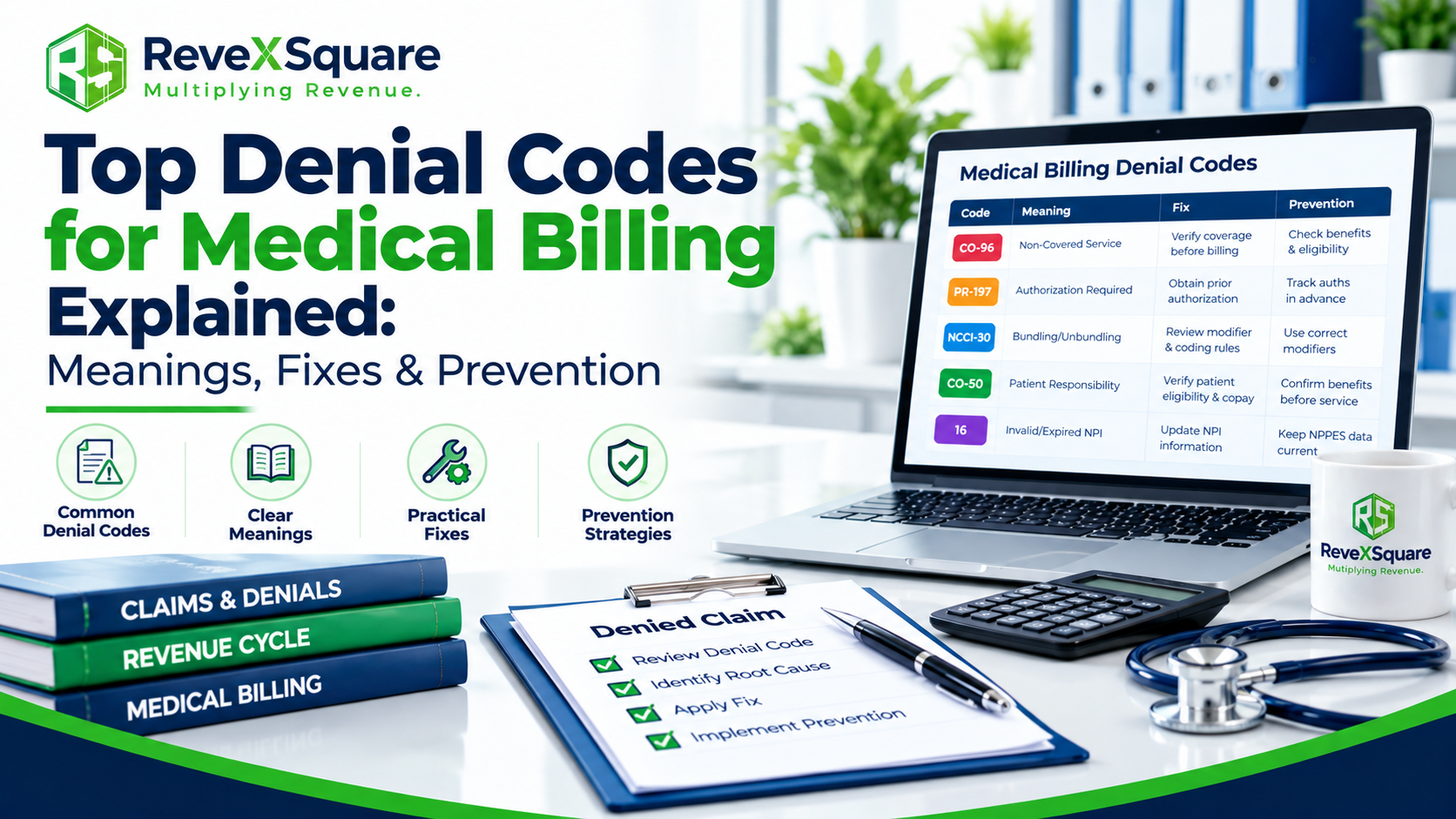
Claims get denied for all kinds of reasons. Maybe the insurer wanted an authorization number. Maybe the chart didn’t back up the service. Maybe the claim reached the payer after the filing deadline, the patient’s insurance info was out of date, or the plan simply doesn’t cover the service.
Whatever the cause, billing staff end up asking the same thing: what went wrong, and what do we do now?
Knowing the top denial codes helps you get to that answer faster. The code points at the problem but rarely explains all of it. Someone still has to read the remittance advice, check the claim, and follow the payer’s instructions before deciding what to do.
This guide outlines 20 frequently encountered Claim Adjustment Reason Codes (CARCs), many Remittance Advice Remark Codes (RARCs), and the measures billing teams can take to resolve claim issues and prevent their recurrence.
What Are Medical Billing Denial Codes?
Medical billing denial codes tell you why an insurer didn’t pay a claim in full or why it changed the amount you asked for. They show up on the payer’s remittance advice next to other claim details.
When reviewing the top denial codes, billing staff can identify common claim issues and determine what needs further investigation.
Think of a code as a starting point. It won’t always say exactly what happened.
Take a claim denied for missing information. You’d need the remark code that comes with it to learn what the payer wants. It could be an authorization number, a medical record, or some other required detail.
From there, compare the payer’s message to the original claim and the patient’s records. That tells staff whether the claim needs a correction, more documentation, or an appeal. CARC vs. RARC: What Is the Difference?
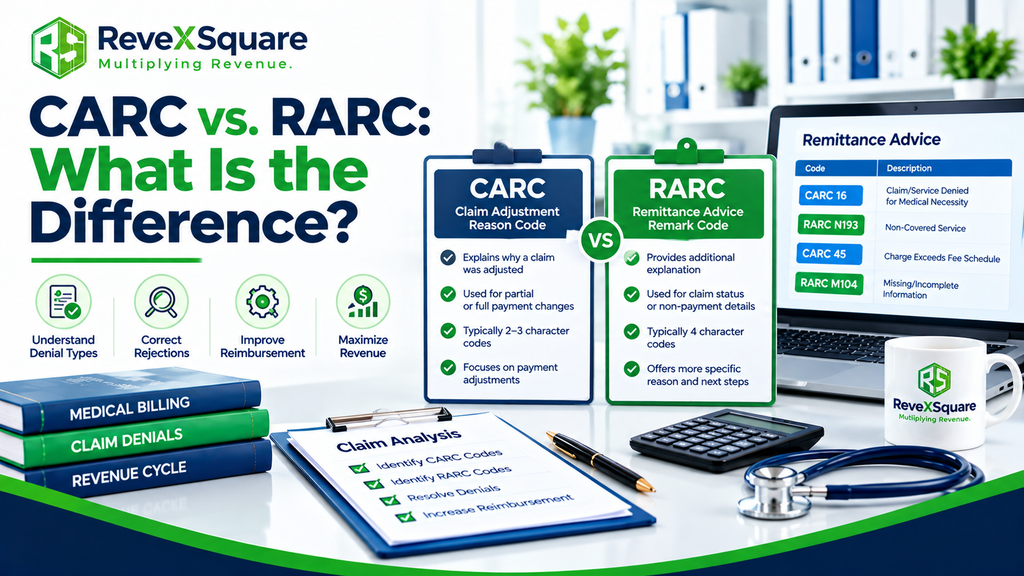
CARCs and RARCs often show up together on a remittance, but they do different jobs.
A Claim Adjustment Reason Code (CARC) gives the main reason for a payment adjustment or denial. A Remittance Advice Remark Code (RARC) adds detail about the payer’s decision or about what the payer needs to process the claim.
Say a CARC tells you the claim is missing information. The RARC next to it is usually what names the missing piece. Group codes count too. CO stands for Contractual Obligation. PR generally marks an amount assigned to patient responsibility. Read the whole remittance advice before deciding whether any amount can go to the patient.
Reading one code by itself is how practices end up making the wrong correction, filing an appeal they didn’t need, or billing a patient in a way the plan doesn’t allow.
Rejection vs. Denial
A rejection typically happens before the payer has finished processing a claim. Something like an invalid member ID, a missing field, or a formatting error stops the claim from moving forward.
A denial means the payer did process the claim or service, then chose not to pay some or all of the amount requested.
This distinction shapes how your billing team responds. A rejected claim usually needs a quick correction before resubmission. A denied claim may call for additional records, a coding correction, a coverage review, or an appeal.
Once staff knows which one they’re dealing with, they can fix the real problem instead of sending the same claim back and getting the same result.
Top Denial Codes in Medical Billing: Quick Reference
This medical billing denial codes list covers 20 CARCs that billing teams run into during claim follow-up. Use the table as a starting point. Then check the full remittance advice and the payer’s instructions before you act.
| CARC | General meaning | First step |
| 4 | The procedure code and modifier do not match, or a required modifier is missing. | Review the procedure and modifier. |
| 5 | Procedure code or bill type conflicts with place of service. | Check the service location and billing details. |
| 6 | Procedure code conflicts with patient age. | Verify patient details and code selection. |
| 11 | Diagnosis conflicts with the procedure. | Review the diagnosis and procedure documentation. |
| 16 | Information needed to process the claim is missing or invalid. | Check the accompanying remark |
| 22 | Another payer may be responsible under coordination of benefits. | Confirm primary and secondary coverage. |
| 27 | Service occurred after coverage ended. | Check eligibility for the date of service. |
| 29 | The claim was submitted after the filing deadline. | Review submission records and appeal options |
| 31 | The payer cannot identify the patient as its insured. | Verify insurance and member details. |
| 49 | Routine examination or screening is not covered in the stated circumstances. | Check the service and benefit rules. |
| 50 | Service was not considered medically necessary. | Review documentation and coverage criteria. |
| 96 | The charge is not covered | Check the related remark and plan benefits. |
| 109 | The claim was sent to the wrong payer. | Identify the responsible payer. |
| 112 | Service was not furnished directly to the patient or was not documented. | Review service records. |
| 119 | The maximum benefit for the period has been reached. | Verify benefit usage and plan limits. |
| 151 | Documentation does not support the number or frequency of services. | Review visit frequency and medical records |
| 197 | Required authorization, precertification, or notification is absent. | Check authorization records. |
| 204 | Service, equipment, or drug is not covered under the current plan. | Review the patient’s benefits. |
| 226 | Requested provider information was missing, late, or incomplete. | Identify and submit the requested information. |
| 284 | The authorization number may be valid but does not apply to the billed service. | Compare authorization details with the claim. |
Understanding the Top Denial Codes
1. CARC 4: Procedure Code and Modifier Mismatch
CARC 4 means the procedure code and the modifier don’t work together. Either a required modifier is missing, or the one on the claim doesn’t fit the procedure.
Example: The payer’s rules call for a modifier on a procedure, and the claim went out without one.
How to resolve it: Review the medical record, coding guidance, and payer policy alongside the claim. Add or change a modifier only when the documentation supports it.
How to prevent it: Check modifiers during charge entry. Review each procedure code with its modifier before submitting the claim.
Understanding how CARC 4 fits among the top denial codes can help billing teams identify modifier-related claim issues.
2. CARC 5: Procedure Code and Place of Service Conflict
CARC 5 shows up when the procedure code or type of bill doesn’t fit the place of service on the claim.
Example: A claim lists one service location, but the procedure happened somewhere else.
How to resolve it: Pull up the encounter record and compare it against the place of service code and the procedure details. If anything is off, correct it before you resubmit the claim.
How to prevent it: Keep the location in your practice system in sync with where care was actually delivered. Practicing billing from multiple locations should watch this one closely.
3. CARC 6: Procedure Code Conflicts With Patient Age
CARC 6 means the procedure code does not match the patient’s age. This may happen because the date of birth is wrong or the wrong code was used.
Example: The claim includes a procedure code for a different age group than the patient’s age in the medical record.
How to resolve it: Check the patient’s date of birth and the date of service. Then review the procedure code to make sure it matches the service provided.
How to prevent it: Check demographics at registration, and turn on billing edits that flag age-related coding problems.
4. CARC 11: Diagnosis Inconsistent With Procedure
Under CARC 11, the payer looks at the diagnosis on your claim and decides it doesn’t fit the procedure that was billed.
Example: A procedure gets paired with a diagnosis that the medical record doesn’t support for that service.
How to resolve it: Pull up the provider’s notes and see which diagnosis got attached to the procedure. Typo or wrong code? Fix it. If the notes don’t make the picture clear, ask the provider who treated the patient rather than filling in the gaps yourself.
How to prevent it: Before a claim leaves your office, glance over each diagnosis and procedure pairing to make sure they belong together. If a claim has several diagnoses or services on it, take a little more time with it.
5. CARC 16: Missing or Invalid Claim Information
CARC 16 signifies that the payer identified a defect or deficiency in the claim. It never moves by itself. It includes a remark code, which indicates what went wrong.
Example: A claim gets stuck because a required field was left empty or a supporting detail never got attached.
How to resolve it: Since the RARC identifies the issue, start with it. Compare it to the claim you filed, identify any errors or gaps, and then send the fix to the payer using their approved route.
How to prevent it: Before a claim goes out, check the patient details, provider identifiers, codes, authorizations, and attachments.
Of all the denial codes for medical billing, this one takes real attention. The cause is different on almost every claim, and the remark code is usually the quickest way to the answer.
6. CARC 22: Another Payer May Be Responsible
CARC 22 means the claim may belong with a different insurer under coordination of benefits rules.
Example: A patient has coverage through an employer and a second plan, and the claim goes to the wrong one first.
How to resolve it: Find out which plans were active on the date of service and work out the correct payer order. Update the coordination of benefits details if they’re off, then send the claim again following the payer’s rules.
How to prevent it: Have patients confirm their insurance whenever their coverage changes. An old insurance record can’t be trusted until someone checks that it’s still current.
7. CARC 27: Service After Coverage Ended
CARC 27 indicates that the service took place after the patient’s coverage had ended.
Example: A patient is seen after their policy has expired, yet the claim still goes to the old insurer.
How to resolve it: Run an eligibility check for the date of service. If the coverage dates look wrong, call the payer or find out whether the patient had another active plan. If the coverage really did end, handle the account under your billing and patient responsibility policies.
How to prevent it: Confirm coverage ahead of the visit when you can, especially for patients who just started a new job or moved to a different plan or insurer.
8. CARC 29: Timely Filing Limit Expired
CARC 29 means the payer received the claim after its filing deadline. The permitted period depends on the payer and the applicable contract.
Example: A claim gets parked in a work queue, nobody finishes it, and it goes out only after the filing window has closed.
How to resolve it: Start with the claim’s submission date, the payer’s records, and the filing deadline. If you sent it on time, hold onto the proof of submission. If it went out late, find out whether the payer allows an appeal or makes exceptions.
How to prevent it: Review pending claims on a regular schedule, and make sure one person owns the follow-up on each. That’s usually enough to spot a delay while there’s still time before the filing deadline
9. CARC 31: Patient Cannot Be Identified as Insured
CARC 31 indicates that the payer was unable to match the patient to an insured member despite searching its records.
Example: The member ID on the claim is different from the ID that the insurer has on file.
How to resolve it: Compare the insurance card or a verified eligibility response with the member ID, patient name, date of birth, and policy details. After you identify the mistake, fix it and submit again using the payer’s procedure.
How to prevent it: Update the patient’s record as soon as a policy or card changes, and double-check insurance information before entering data. An otherwise flawless assertion may be undermined by a single incorrect digit.
10. CARC 49: Routine Examination or Screening Not Covered
CARC 49 applies when a routine examination or screening performed in conjunction with a routine exam falls under the stated noncovered circumstances. It does not mean every preventive service is excluded.
Example: A service gets treated as part of a routine exam, and the plan’s coverage rules don’t pay for it in that situation.
How to resolve it: Look at the service, the diagnosis, and the benefit details together. Make sure the claim was coded correctly, then find out whether the plan covers the service under those circumstances. Never change a diagnosis just to get a claim paid.
How to prevent it: When you can, confirm the preventive care benefits and payer requirements before you bill. Your documentation should clearly show why the patient came in and which services they received.
11. CARC 50: Service Not Considered Medically Necessary
CARC 50 means the payer has decided the service doesn’t meet its medical necessity criteria for coverage.
Example: The records sent with the claim don’t show why the service met the payer’s clinical requirements.
How to resolve it: Read the denial alongside the payer’s coverage policy. If the chart backs up the service, put together an appeal with the right supporting documents. If something is missing, follow your practice’s process for getting the records you need.
How to prevent it: Learn the payer’s criteria for services that often go through medical necessity review. Make sure the record you submit lays out the clinical reasons behind the care.
A medical necessity denial does not automatically mean the care was inappropriate. The decision needs to be reviewed against the plan’s rules and the clinical documentation.
CARC 50 is one of the top denial codes billing teams should understand when reviewing medical necessity denials.12.
CARC 96: Noncovered Charge
CARC 96 is the payer’s way of saying a charge isn’t covered. A remark code always comes with it, and that’s the part that tells you why.
Example: The practice bills for something the patient’s plan just doesn’t include.
How to resolve it: Hold off on editing the claim. Read the remark code, then open the patient’s benefits and see what the plan says. Sometimes it’s a true exclusion. Sometimes the service was coded wrong. Occasionally another coverage rule is behind it. Change the claim only if the information you sent was incorrect.
How to prevent it: Check the benefits and the payer’s policy before the visit if there’s time. Make sure your staff also knows when a notice or a talk with the patient is required.
13. CARC 109: Claim Sent to the Wrong Payer
CARC 109 means the claim went to a payer or contractor that doesn’t cover the service.
Example: A claim goes to a medical insurer when a different plan is responsible for that service.
How to resolve it: Confirm the patient’s coverage and figure out who the right payer is. Send the claim there, and watch the filing deadline while you do it.
How to prevent it: Check the payer’s role before you submit. An insurer sitting in the patient’s old record may not be responsible anymore.
14. CARC 112: Service Not Furnished Directly to the Patient or Not Documented
CARC 112 means the service wasn’t furnished directly to the patient, or it wasn’t documented.
Example: The claim describes a service, but the record doesn’t show it was provided the way it was billed.
How to resolve it: Line the claim up against the medical record and the service documentation. If a record is missing, track it down through your normal process. If the claim itself is wrong, fix the claim. Don’t add details the chart doesn’t support.
How to prevent it: Keep service records complete, and make sure billing can get to the documentation behind each claim.
15. CARC 119: Benefit Maximum Reached
CARC 119 means the patient has used up the benefits allowed for a certain period.
Example: The plan covers a certain number of visits, and the patient has already used all of them.
How to resolve it: Check the plan’s limit and the visits counted by the insurer. Review earlier claims to make sure they were processed correctly. If the numbers do not match, contact the payer to have them checked. Also find out whether the plan allows extra visits or exceptions.
How to prevent it: Track visit limits when you have reliable benefit information. When a patient is close to a limit, tell the staff who need to know.
16. CARC 151: Number or Frequency of Services Not Supported
CARC 151 means the submitted information doesn’t support how many services were billed or how often.
Example: A claim lists more visits than the documentation seems to back up under the payer’s requirements.
How to resolve it: Go through the service dates, units, frequency, and medical records. Make sure the claim shows the care that was actually provided and includes whatever supporting information the payer requires.
How to prevent it: Check units and frequency before submitting. Keep documentation current, and read the payer’s rules for services with frequency limits.
CARC 151 and CARC 119 are different. Code 119 is about a benefit maximum. Code 151 is about whether the submitted information supports the number or frequency of services.
17. CARC 197: Required Authorization or Notification Missing
CARC 197 means the payer did not receive the required prior authorization, precertification, or notification for a service.
Example: There is no approval information on the claim, and the plan needs prior authorization for a service.
How to resolve it: Check the payer’s rules and look through the practice’s records for an approval. Make sure it covers the patient, provider, service, and date in question. If no approval was obtained, contact the payer to find out whether any options remain.
How to prevent it: When making appointments or handling referrals, make sure to check the authorization requirements. Before filing the claim, make sure you can access the approval data.
18. CARC 204: Service Not Covered Under the Current Benefit Plan
CARC 204 means the service, equipment, or drug isn’t covered under the patient’s current benefit plan.
Example: The patient has active insurance, but the plan doesn’t cover that specific service.
How to resolve it: Read the payer’s explanation of benefits and the benefit documents. Check that the service was billed correctly and whether any other coverage applies. If the exclusion is valid, follow your billing and patient communication procedures.
How to prevent it: Check coverage before providing services that may have restrictions. A patient can have active insurance and still have a service that the plan won’t pay for.
19. CARC 226: Requested Provider Information Was Not Supplied
CARC 226 means information requested from the billing or rendering provider didn’t arrive on time or was incomplete. At least one remark code comes with it.
Example: The payer asks for medical records and doesn’t get the full set by the deadline.
How to resolve it: Check the remark code to see what the payer needs. Gather the requested documents, check the deadline, and send them the way the payer requires. Keep a copy of what you sent.
How to prevent it: Give each request to a staff member as soon as it arrives. Note the deadline and make sure the payer receives the documents on time.
20. CARC 284: Authorization Does Not Apply to the Billed Service
CARC 284 indicates that the service billed is not covered by the authorization on file.
For instance, even though the practice is permitted, the claim contains a different process or a service date that is outside of the authorized time frame.
How to resolve it: Check the license and the claim. Verify that the service, provider, dates, and visit or unit limitations are the same. If you have any inquiries, please contact your payer.
How to prevent it: Before you bill, make sure that the authorization contains the services the patient received. Not all associated services are issued with an authorization number.
Common RARCs and What They Tell You
CARCs give the main reason for an adjustment. RARCs fill in details that help your team understand the payer’s decision or work out what the payer still needs.
| RARC | General explanation | What to check |
| N130 | Consult plan benefit documents or guidelines for service restrictions | Review the relevant coverage rules |
| N386 | Decision is based on a National Coverage Determination | Check the applicable Medicare coverage determination |
| N517 | Resubmit a new claim with the requested information | Confirm the required details and resubmit as instructed |
| N519 | HCPCS modifiers were submitted in an invalid combination | Review the modifier combination and coding guidance |
| M127 | Medical record for the service is missing | Locate and submit the requested record |
Read a remark code in context. The CARC, the RARC, the group code, and the payer’s instructions together tell you what the practice should do next.
T Denial Codes and Solutions: A Practical Workflow
After a denial, your needs are to identify the cause, select the appropriate action, and observe the result. Claims don’t fall through the follow up queue with a simple process.
Reviewing the top denial codes can help billing teams identify the cause of a denial and choose the appropriate next step.
Step 1: Read the Complete Remittance Advice
Begin with the CARC, any RARC, group code, and claim line impacted. Did the payer change a service or the complete claim?
Step 2: Compare the Claim With the Records
Lay the original submission next to the patient’s coverage, medical documentation, coding, authorization, and supporting documents. Sometimes the mistake came from your side. Sometimes it came from how the payer processed the claim. This is how you tell the difference.
Step 3: Decide What Needs to Happen
Some allegations need to be corrected. Some demand supporting documents, a call to the payer, or an appeal. A blank field is not a real denial of coverage and needs to be responded to differently.
Don’t refile a refused claim if you don’t know what went wrong. If you ask the same question again, you will rarely get a different answer.
Step 4: Follow the Payer’s Instructions
Check requirements and deadlines before you send a correction or appeal. Use the method the payer accepts, and keep a record of what you sent.
Step 5: Track It Until It’s Resolved
Note your actions, the reference number, the date you sent it, and the date you plan to follow up. The claim remains on the task list until the payer responds or the account receives a documented final outcome.
That’s what keeps medical billing denial codes and solutions manageable. It’s also how staff start to see repeat problems instead of treating each unpaid claim as its own case.
Other Adjustment Codes Often Mistaken for Denial Codes
Some codes signify the payer paid less than the billed amount; others indicate a duplicate claim or a service already paid for by another payment. Knowing what each code represents helps staff not do unnecessary work and work on claims that require work.
CARC 18: Duplicate Claim or Service
CARC 18 suggests the payer suspects duplicate claims or services. Check the initial claim to determine if the payer processed it before sending it again. If it has, another submission may not be needed.
CARC 45: Contracted Allowable Amount
Some codes show that the payer paid less than the amount billed. Others flag a claim that was sent twice or a service the payer has already paid for. Knowing why the payment was reduced helps staff decide what needs to be checked and what can be left alone.
CARC 59: Multiple Procedure Adjustment
CARC 59 shows up when multiple surgery or concurrent anesthesia rules have reduced the payment. It doesn’t mean the service was billed incorrectly. Before you act on it, go through the procedures that were performed, the payer’s payment rules, and whatever explanation came with the remittance.
CARC 97: Service Included in Another Payment
CARC 97 means the payer considers the service already paid for within the allowance for another service or procedure.
When you’re reviewing a CO 97 denial code, check the bundling rules and the documentation. If the service should be paid separately, collect the coding and record support for a payer inquiry or appeal. Don’t add a modifier just to get around a bundling edit.
CARC 199: Revenue Code and Procedure Code Mismatch
CARC 199 means the revenue code and procedure code don’t match. It matters most on facility claims. Review the code combination and the billing requirements before you resubmit.
These codes call for a different kind of review than claims denied for missing information or eligibility problems. Let the payer’s explanation guide your response.
Most Common Reasons for Medical Claim Rejections
A claim may be rejected because information is missing, patient or provider details are incorrect, or the codes do not match. These errors can prevent the payer from processing the claim.
Common examples include:
- Wrong insurance member ID
- Missing or incorrect provider details
- Patient information is incomplete.
- Incorrect procedure, diagnosis, or modifier codes
- Wrong place of service on the claim
- Missing information required by the claim format
When a rejection happens, start with the clearinghouse or payer message. Fix the specific error and resubmit under the applicable rules.
Keep rejected and denied claims in separate queues. A rejection usually needs a data fix. A denial may need a look at coverage, documentation, or payment policy.
How to Reduce Healthcare Claim Denials Effectively
To avoid repeat denials, start by looking at what is going wrong with your claims. You may need to check insurance details more carefully, keep better track of authorizations, or fix coding errors. Focus on the problems that come up most often in your practice.
Verify Insurance and Benefits
Check that the patient’s insurance was active on the date of checkup. Review the covered services, benefit limits, and whether another insurer should pay first. If the details don’t look right, check with the payer before billing.
Check Authorizations Before Treatment
Check whether the payer requires approval or a referral before the service. Keep the approval details on file and make sure they match the service provided.
Review Documentation and Coding
Before sending the claim, check it against the provider’s notes. Make sure the codes, modifiers, and units reflect the service provided. If the notes don’t give you enough information to bill the service correctly, check with the provider first.
Monitor Filing Deadlines
Check unpaid claims regularly to see which ones are getting close to the filing deadline. Follow up on claims that are still pending instead of letting them sit in the queue until it is too late.
Look for Patterns in Denials
Review denials by code, payer, provider, location, and service type when the data is available. If the same denials keep appearing, look for problems in the billing process that may be causing them.
For example, recurring authorization denials may mean approval checks happen too late. Repeated eligibility issues may mean insurance details aren’t getting updated at registration.
Measure Results
Track the denial rate, first pass acceptance rate, days in accounts receivable, time spent resolving denials, and total unpaid claims. Use the same measures each time you review the results so you can compare performance accurately.
None of these best practices for appealing denied medical claims or preventing repeat errors will stick unless the practice reviews results on a schedule and gives someone clear responsibility for follow-up.
Best Practices for Appealing Denied Medical Claims
Before appealing a denied claim, find out why the payer rejected it. Sending the same claim again without fixing the problem will not help if the issue involves coverage or medical necessity.
Check the denial notice and note the deadline for filing an appeal. Check the claim to find out why the payer denied it.
You may need to fix a billing error, send missing records, or explain why the payer’s decision needs another look.
If you plan to appeal, collect the necessary documents first. These may include:
- The original claim and remittance advice
- Relevant medical records
- Authorization or referral details
- An explanation of why the denial should be reviewed
- Supporting coding or coverage information
- Required appeal forms and attachments
Keep your explanation clear and stick to the facts. State why the payer denied the claim, explain why the practice disagrees, and show how the records support your position. Do not include information that the medical record does not support.
Keep the date you sent the appeal and save the confirmation. If the payer asks for more records, send them before the due date using the method the payer accepts.
An appeal does not guarantee payment. The payer makes its decision based on the plan’s terms, the available evidence, applicable rules, and the details of
Understanding the top denial codes can help billing teams identify denial reasons and prepare more focused appeals.
When Should a Practice Seek Medical Billing Denial Management Support?
Denial follow-up gets hard when unpaid claims pile up, payer requests go unanswered, or the same problems return month after month. Staff may also struggle to decide which accounts to work first.
Extra help may make sense when:
- Unpaid claims sit in accounts receivable for too long.
- Filing deadlines or appeal deadlines are missed
- Documentation requests stay open.
- Authorization and eligibility issues keep coming back.
- Denial reports exist, but the underlying causes are still unclear.
- The internal team needs help with specific billing tasks.
Good denial management is more than resubmitting claims. It means finding out why a claim wasn’t paid, deciding what can be done, and spotting ways to keep it from happening again.
Revex Square helps medical practices with billing, denied claims, and unpaid balances. Its team reviews claims that haven’t been paid, looks into the reasons for denial, and helps resolve billing issues. Practices can also keep track of which claims are still waiting for a response or payment.
Frequently Asked Questions About Top Denial Codes
What are the top denial codes in medical billing?
This guide covers CARCs 4, 5, 6, 11, 16, 22, 27, 29, 31, 49, 50, 96, 109, 112, 119, 151, 197, 204, 226, and 284. What each one means and what to do next depends on the claim details and the remittance information that comes with it.
What are the top 10 denial codes in medical billing?
Ten codes to know are CARCs 4, 11, 16, 22, 29, 31, 50, 96, 197, and 226. The codes you see most often will depend on your specialty, the insurance plans you accept, and the number of claims you handle.
What does CO 16 mean in medical billing?
CO 16 means information needed to process the claim is missing or invalid. Read the remark code to find the specific problem. Then correct the error if the records support it, or send what the payer asked for through its required process.
What does CO 119 mean?
CO 119 means the benefit maximum for the period has been reached. Check the plan’s limits and how much of the benefit has been used before deciding whether the claim needs a correction or a closer look.
What does CO 197 mean?
CO 197 means a required authorization, precertification, notification, or pretreatment approval is absent. Find out whether approval was required, and whether your practice has a valid record of it for the service.
What does CO 151 mean?
CO 151 means the submitted information doesn’t support the number or frequency of services billed. Go back to the medical records, dates, units, and the payer’s requirements.
What does CO 97 mean?
CO 97 means the payer treats the service as included in payment for another service or procedure. Check the bundling rules and the documentation before deciding whether a payer inquiry or appeal is worth it.
What is the difference between a denial code and a remark code?
A CARC gives the main reason for an adjustment or denial. A RARC adds detail that clarifies the payer’s decision or names what’s needed to process the claim.
How can a practice interpret denial codes from insurance claims?
Check the remittance advice to see why the payer denied the claim. Compare it with the claim you submitted, the medical records, the patient’s insurance details, and the payer’s rules. Once you find the issue, you can fix the claim, send any missing documents, contact the payer, or appeal the decision.
What are the most common denials in medical billing?
A claim may be denied because of incorrect details, inactive insurance, a missed filing deadline, or missing authorization. Errors in coding, lack of medical necessity, and services not covered by the plan can also cause problems. The reasons vary from one specialty and insurance payer to another.
How can a practice reduce repeat denials?
Check the patient’s insurance before billing. Make sure any required authorization is in place and that the records support the codes on the claim. Submit claims on time and keep track of recurring denials. Assign someone to follow up on unpaid claims, and when the same problem keeps happening, find out where the process is going wrong.
Can every denied claim be appealed?
No. Some claims need a correction or more information, not an appeal. Others were denied correctly under the plan’s terms. Appeal when you have a reasonable basis to challenge the decision, and follow the payer’s process.
How can Revex Square help with medical billing denials?
Revex Square can help with denial follow-up, claim review, accounts receivable management, and related billing tasks. How much support you get depends on your practice’s needs and the claims that need attention.
Conclusion: Make Denial Follow-Up More Effective
A denial code helps you see why a claim was not paid, but you still need to find out what went wrong. Sometimes, fixing the problem is as simple as correcting a missing detail or member ID. Other claims need a closer review of the medical record, insurance coverage, or authorization.
Find the real cause before you act. A clear follow-up process helps staff meet deadlines, keep records of their work, and notice problems occurring across multiple claims.
Revex Square helps healthcare practices with medical billing, denial follow-up, and accounts receivable management. If your team is dealing with aging balances, repeated denials, or payer requests that never got answered, contact Revex Square to talk about billing support that fits your practice.