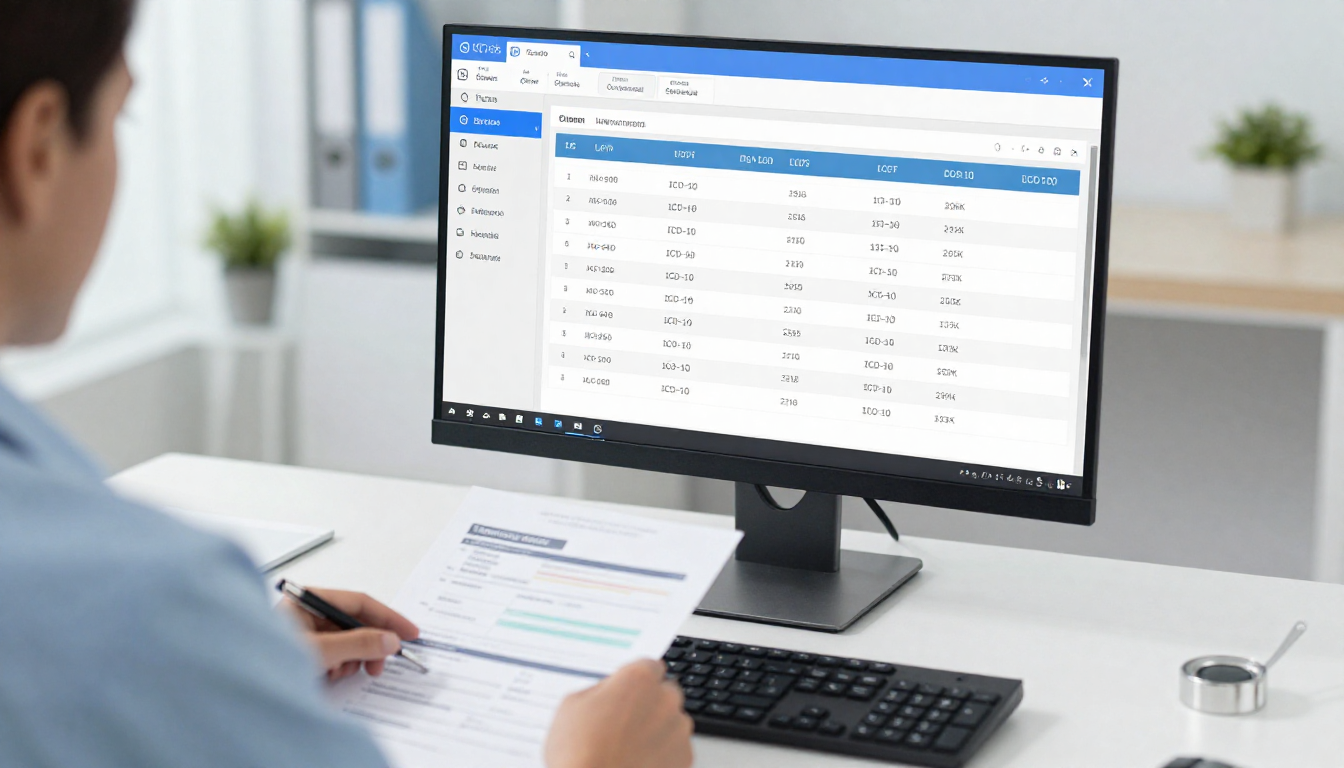










Managing medical billing internally can become challenging as the number of claims, denials, rules from payers and money that is owed all increase. Choosing to send billing tasks to another company gives medical offices access to experienced billing and money management help without the cost of hiring more people. Sending billing tasks to a different company means hiring a group that focuses on insurance checks, coding, sending bills handling denied claims and following up on money that is owed instead of doing all of that by yourself. Most offices decide to send billing tasks away to lower the number of denied claims get money faster and save the cost of hiring and training people to do that work. Some companies that handle medical billing charge a percentage of the money they collect and the amount they charge can change based on the type of work how much money is collected the number of bills and what services are provided.
Every medical office eventually finds itself at the point: bills are piling up the people at the front desk are overwhelmed with paperwork denied claims keep coming back and the money being collected does not match the number of patients seen. At that time most office owners start typing the words into a search engine “should I send medical billing tasks away?”
This article answers that question completely. You will find an explanation of what sending medical billing tasks away involves, how much it costs compared to doing it on your own the signs that it is time to change and a step by step way to pick a billing partner that you can trust with your money management.
What Does It Mean to Outsource Medical Billing Services?
Sending billing tasks away means giving some or all of the money management tasks. Like checking insurance, coding, sending bills, recording payments following up on unpaid bills and handling denied claims. To a company that specializes in this work instead of doing it with your own team.
Than hiring, training and keeping an internal team the office pays the billing company a percentage of the money collected or a monthly fee. In return the office gets help from people who know how to code use billing software have connections with payers and focus only on making sure bills get paid on time. The coding rules used during this process. Like ICD-10, CPT and HCPCS. Are set by groups such as the American Academy of Professional Coders and the rules from payers come from guidelines published by the Centers for Medicare & Medicaid Services (CMS).
This is different from buying billing software. The software still needs someone at your office to use it chase denied claims. Stay updated on the rules from payers. A true service that sends medical billing tasks away replaces all of that work with a team that handles everything, which’s why this approach is now often called sending medical billing tasks away instead of just “billing” alone.
Why This Decision Matters Right Now
The rules for getting paid have become much more complicated in recent years. Payer rules change often the need for approval before treatment has. The number of denied claims has been rising across most medical fields. Industry reports from groups like the Medical Group Management Association (MGMA) show how important it is to manage denied claims and money that is owed. Practices that are not good at following up on denied claims and money that is owed see lower money collected than those that have strong money management processes.
Medical offices that used to manage billing with one or two people now find that the amount of work is too much while the money coming in does not match the number of patients seen. This is one reason more doctors and small groups are choosing to send billing tasks away instead of trying to grow an internal team.
In-House vs. Outsourced Medical Billing: Side-by-Side Comparison
Before making a decision, it helps to see the two models compared directly across the factors that matter most to a practice’s bottom line.
| Factor | In-House Billing | Outsourced Medical Billing |
|---|---|---|
| Staffing cost | Salary, benefits, payroll taxes, and training for each biller | No salaries or benefits pay only a percentage of collections or flat fee |
| Software & tools | Practice must purchase and maintain billing software licenses | Billing company typically includes software/technology in the service |
| Coding accuracy | Depends on in-house staff’s certification and ongoing training | Handled by certified coders who work across multiple specialties daily |
| Denial management | Often reactive; denials pile up when staff is overloaded | Proactive tracking, appeals, and resubmission built into the process |
| Scalability | Adding patient volume requires hiring more staff | Scales automatically as claim volume grows |
| Compliance risk | Practice is solely responsible for staying current with payer & HIPAA rules | Billing partner monitors regulatory and payer policy changes |
| Staff turnover impact | A single biller leaving can stall the entire revenue cycle | Team-based model means no single point of failure |
| Reporting & visibility | Varies widely depending on staff bandwidth | Regular, standardized reporting on claims, denials, and collections |
The comparison makes one thing clear: outsourcing doesn’t just reduce cost it reduces risk. A practice with one overworked in-house biller is far more vulnerable to revenue disruption than one backed by a dedicated billing team.
Signs Your Practice Should Consider Outsourcing Medical Billing
Not every practice needs to outsource immediately, but certain patterns are strong indicators that in-house billing is no longer working efficiently.
- Claim denial rates are rising and staff don’t have the bandwidth to appeal them promptly.
- Accounts receivable is aging past 90 or 120 days, meaning cash is tied up in unpaid claims.
- Patient volume has increased, but collections haven’t grown at the same rate.
- Billing staff turnover is frequent, creating knowledge gaps and delayed claim submission.
- There’s little to no visibility into what’s actually happening with claims, denials, or payer performance.
- Credentialing and payer enrollment are falling behind, delaying reimbursement for new providers.
- Staff are spending more time on billing than on patient-facing work.
If two or more of these apply to your practice, it’s usually a sign that the current billing structure has outgrown its capacity and that’s exactly the point where outsource medical billing searches turn into actual decisions.
Key Benefits of Outsourcing Medical Billing Services
1. Lower Operational Costs
Running billing in-house means paying salary, benefits, paid leave, and ongoing training for every staff member involved even during slow months when claim volume is lower. Outsourced billing is typically priced as a percentage of collections, meaning the practice only pays when it gets paid. This aligns the billing company’s incentives directly with the practice’s revenue goals. See current pricing structures for a full breakdown of how percentage-based billing works.
2. Fewer Claim Denials, Faster Reimbursement
Certified coders and billing specialists who work across dozens of practices daily are far more likely to catch coding errors, missing modifiers, and eligibility issues before a claim is ever submitted. This directly improves the first pass claim acceptance rate the percentage of claims paid without requiring resubmission which is one of the most important indicators of a healthy revenue cycle.
3. Improved Cash Flow and Reduced AR Aging
A dedicated AR follow-up process means outstanding claims don’t sit untouched for 60, 90, or 120+ days. Outsourced billing teams typically work aging reports on a set schedule, following up with payers before claims fall into hard-to-recover territory. This is especially important for hospitals and larger facilities, where hospital accounts receivable outsourcing and hospital revenue cycle outsourcing have become common strategies for keeping AR days within a manageable range.
4. Built-In Compliance and HIPAA Safeguards
Payer regulations, CPT/ICD-10 code updates, and HIPAA requirements change constantly. A specialized billing partner is expected to stay current with these changes as part of their core service, reducing the compliance burden that would otherwise fall entirely on the practice. Official HIPAA requirements are maintained by the U.S. Department of Health & Human Services, and any billing partner you choose should be able to explain exactly how their workflows align with those standards.
5. More Time for Patient Care
Every hour a provider or front-desk staff member spends chasing a denied claim is an hour not spent on patient care or practice growth. Outsourcing removes this administrative weight from clinical staff and in some cases, practices pair billing outsourcing with a virtual assistant service to offload scheduling and patient communication as well.
6. Scalability Without Hiring
As a practice grows adding providers, opening new locations, or expanding into new specialties an outsourced billing partner scales with that growth without the practice needing to recruit, hire, and train additional in-house staff. This is also why larger, multi-location groups increasingly describe their strategy as outsourcing revenue cycle management rather than simply “outsourcing billing” the scope is broader than claims alone.
7. Access to Specialty-Specific Billing Expertise
Billing rules differ significantly between specialties like mental health, cardiology, dermatology, and physical therapy. Outsourced billing companies that support multiple specialties bring coding expertise that a small in-house team often can’t match, including for lower-volume niches such as ambulatory RCM and outpatient procedure billing.
What Services Are Typically Included When You Outsource Medical Billing?
A comprehensive outsourced medical billing service usually covers the full revenue cycle, not just claim submission. Here’s what a full-service RCM partnership typically includes:
- Insurance eligibility verification : confirming coverage and benefits before the patient is seen (eligibility verification services)
- Medical coding : accurate ICD-10, CPT, and HCPCS code assignment
- Charge entry and claim submission : submitting clean claims to Medicare, Medicaid, and commercial payers, sometimes referred to as medical claims processing outsourcing
- Payment posting : recording and reconciling payments against submitted claims
- Denial management and appeals : identifying denial reasons and resubmitting corrected claims
- Accounts receivable follow-up : actively pursuing unpaid or underpaid claims
- Patient billing and statements : generating accurate patient invoices and managing collections (patient billing services)
- Credentialing and payer enrollment : enrolling providers with insurance networks (credentialing & enrollment services)
- Reporting and analytics : providing visibility into collections, denial trends, and payer performance
Medical Billing Outsourcing Cost: What to Expect in 2026
Pricing models vary by billing company, practice size, and specialty, but most outsourced medical billing services fall into one of three structures.
| Pricing Model | How It Works | Best For |
|---|---|---|
| Percentage of Collections | Billing company charges a percentage (typically 2.99%–8%) of what’s actually collected | Most small to mid-sized practices cost scales with revenue |
| Flat Monthly Fee | Fixed fee regardless of claim volume or collections | Practices with predictable, stable claim volume |
| Per-Claim Fee | A set fee charged for each claim processed | Practices with low claim volume or seasonal fluctuations |
The percentage-of-collections model is the most common in the industry because it directly ties the billing company’s revenue to the practice’s success if claims don’t get paid, the billing company doesn’t get paid either. Rates generally depend on specialty complexity, claim volume, and the scope of services included (for example, whether credentialing and patient billing are bundled in).
It’s worth comparing this against the true cost of in-house billing, which includes salary, benefits, software licensing, training, and the hidden cost of denied or unworked claims expenses that often add up to more than the percentage charged by a 3rd party medical billing company.
Outsourced Revenue Cycle Management vs. Outsourced Billing: Is There a Difference?
The terms are often used interchangeably, but there’s a meaningful distinction. Outsourced billing usually refers narrowly to claim submission and payment posting. Revenue cycle outsourcing sometimes called outsourcing revenue cycle management covers the entire process end to end: eligibility verification, coding, charge capture, claim submission, denial management, AR follow-up, and credentialing.
Most practices searching for a billing partner in 2026 are really looking for full RCM outsourcing rather than billing alone, since the two are deeply connected — a coding error upstream becomes a denial downstream, and an unverified eligibility check becomes a patient billing dispute later. Choosing a partner who manages the complete cycle, rather than one isolated piece, is generally the more effective long-term strategy.
How to Choose the Right Medical Billing Company
Not all medical billing companies operate at the same level. Use this checklist to evaluate a potential partner before signing an agreement.
| What to Look For | Why It Matters |
|---|---|
| HIPAA-compliant processes | Protects patient data and keeps your practice compliant |
| Specialty-specific coding experience | Reduces denials tied to specialty-specific coding rules |
| Transparent reporting | Gives you visibility into claims, denials, and collections at all times |
| Clear denial management process | Shows how quickly and effectively rejected claims get resolved |
| No long-term lock-in contracts | Protects you if performance doesn’t meet expectations |
| Credentialing support included | Speeds up onboarding for new providers |
| References or verified client reviews | Confirms real-world performance, not just marketing claims |
| Clear, all-inclusive pricing | Avoids hidden fees for services like patient billing or reporting |
Before signing with any billing partner, ask directly about their average claim denial rate, their typical days-in-AR benchmark, and how they handle underpayments from payers. A billing company confident in its performance will be able to answer these questions with real numbers, not vague reassurances.
Common Mistakes Practices Make When Outsourcing Medical Billing
- Choosing a provider based on price alone, without checking claim accuracy or denial rates.
- Not asking about specialty experience, which leads to preventable coding-related denials.
- Skipping the transition plan, resulting in a gap in claim submission during the switch.
- Failing to review reporting regularly, which defeats the purpose of outsourcing for visibility.
- Signing long-term contracts without a performance review clause.
Avoiding these mistakes usually comes down to one thing: treating the billing company selection process with the same diligence you’d apply to hiring a key staff member — because that’s effectively what they become.
Specialty-Specific Considerations When Outsourcing
Billing complexity varies significantly by specialty. Here’s how outsourcing needs differ across a few common practice types.
| Specialty | Common Billing Challenge | What to Prioritize in a Billing Partner |
|---|---|---|
| Mental Health | Session-limit rules, pre-authorization requirements | Experience with behavioral health payer policies |
| Cardiology | High-complexity procedure coding, frequent code updates | Coders with cardiology-specific CPT/ICD-10 expertise |
| Dermatology | Mix of medical and cosmetic procedure billing | Clear separation of covered vs. non-covered procedures |
| Physical Therapy | Visit-limit tracking, therapy cap compliance | Strong AR follow-up for recurring claim cycles |
| Emergency Room | High claim volume, rapid turnaround needs | Fast, accurate coding and rapid claim submission processes |
Choosing a billing partner with proven experience in your specific specialty is often the single biggest factor in reducing denials and improving first-pass claim acceptance.
The Real Cost of Not Outsourcing
Practices often evaluate outsourcing purely on the percentage a billing company charges, without weighing it against the hidden costs of keeping billing in-house. Those hidden costs rarely show up as a single line item they show up as revenue that simply never gets collected.
Consider what happens when a single in-house biller is out sick, on leave, or leaves the practice altogether. Claims stop moving. Denials go unappealed. New patient eligibility checks fall behind. None of this appears on a budget spreadsheet, but it directly reduces monthly collections, a pattern explored further in Why Is My Practice Collecting Less Despite Seeing More Patients?
There’s also the cost of slow adaptation. Payer policies, prior authorization rules, and coding guidelines change frequently, and a single in-house biller — no matter how experienced — cannot realistically track every payer-specific update across every insurance carrier a practice works with. A dedicated billing company, by contrast, is built around staying current with these changes because it directly affects every client they serve.
When practices finally calculate the full picture lost revenue from denials, aging AR, staff turnover disruption, and missed reimbursement opportunities the true cost of in-house billing is often significantly higher than the percentage-based fee charged by an outsourced partner.
How Outsourcing Impacts the Patient Experience
Billing doesn’t only affect a practice’s back office it directly shapes how patients experience the practice. Inaccurate statements, unexpected balances, and confusing invoices are among the most common reasons patients lose trust in a provider, even when the clinical care they received was excellent.
Outsourced billing teams typically manage patient statements with more consistency than an overstretched in-house staff member juggling multiple responsibilities. Clear, accurate, and timely patient billing reduces confusion, speeds up patient payments, and reduces the number of billing-related complaints a front desk has to handle. For practices trying to improve patient satisfaction scores alongside collections, this is often an overlooked benefit of outsourcing.
Making the Switch: What the Transition Actually Looks Like
Practices considering outsourcing often hesitate because they’re worried about disruption during the transition. In a well-managed switch, the process typically follows these steps:
- Audit of current billing performance : reviewing existing claim data, denial trends, and AR aging.
- Data migration : transferring patient, payer, and claims data securely into the new billing workflow.
- Parallel run period : the new billing partner begins working alongside existing processes to avoid gaps in claim submission.
- Full transition : the outsourced team takes over day-to-day billing operations.
- Ongoing reporting and optimization : regular check-ins to track denial rates, collections, and AR performance.
A reputable billing partner will walk you through each of these stages clearly, with defined timelines, before you commit.
Why Healthcare Providers Choose Revex Square
Revex Square works with solo providers, small practices, and multi-specialty healthcare facilities across the United States to manage the full revenue cycle from insurance verification and medical coding to denial management, credentialing, and patient billing. With HIPAA-compliant workflows, specialty-focused billing support, and transparent reporting, Revex Square is built to help practices reduce denials, shorten AR cycles, and recover revenue that’s often lost to in-house billing gaps.
Rather than a one-size-fits-all service, billing strategies are tailored by specialty covering everything from mental health and cardiology to physical therapy and emergency room billing with rates starting at 2.75% of collections and no hidden fees. Full pricing details are available on the pricing page.
If claim denials, aging AR, or inconsistent collections have been holding your practice back, a complimentary payer performance audit is the fastest way to see exactly where revenue is being left on the table with no obligation to switch. You can also schedule a free consultation directly with the Revex Square team.
Frequently Asked Questions
Q: What does it mean to outsource medical billing services?
A: Outsourcing medical billing services means hiring a third-party company to manage insurance verification, coding, claim submission, payment posting, and denial follow-up instead of handling these tasks with in-house staff.
Q: Is it worth outsourcing medical billing for a small practice?
A: For most small practices, outsourcing is worth it once billing volume outpaces what one or two in-house staff can manage effectively. It typically reduces denial rates, shortens AR aging, and removes the cost of hiring dedicated billing staff.
Q: How much does it cost to outsource medical billing services?
A: Most billing companies charge a percentage of collections, typically ranging from 2.99% to 8%, depending on specialty, claim volume, and the scope of services included. Flat-fee and per-claim pricing models are also available for practices with more predictable volume.
Q: Is outsourced medical billing HIPAA compliant?
A: Reputable medical billing companies operate under HIPAA-compliant processes to protect patient health information throughout claim submission, coding, and reporting, in line with standards published by the U.S. Department of Health & Human Services. Always confirm a billing partner’s compliance practices before signing an agreement.
Q: Can I outsource only part of my billing, like denial management?
A: Yes. Many billing companies offer modular services, allowing practices to outsource specific functions such as denial management or credentialing while keeping other billing tasks in-house.
Q: How long does it take to switch to an outsourced medical billing company?
A: Transition timelines vary, but a typical switch including data migration and a parallel-run period takes a few weeks to a couple of months, depending on practice size and claim volume.
Q: Will outsourcing medical billing reduce my claim denial rate?
A: In most cases, yes. Outsourced billing teams typically have specialty-specific coding expertise and dedicated denial management processes that catch errors before submission and resolve denials faster than an overloaded in-house team.
Q: What’s the difference between medical billing outsourcing and revenue cycle management (RCM) outsourcing?
A: Medical billing outsourcing typically refers to claim submission and payment posting, while revenue cycle management outsourcing covers the full process including eligibility verification, coding, credentialing, denial management, and patient billing. Most full-service billing companies today offer complete RCM outsourcing rather than billing alone.
Q: Do I lose control over my practice’s billing data if I outsource?
A; No. A reputable billing partner provides ongoing access to reporting and dashboards so practices retain full visibility into their claims, collections, and denial trends at all times outsourcing shifts the workload, not the ownership of your data.
Q: What is the difference between a 3rd party medical billing company and an in-house billing department?
A: A 3rd party medical billing company is an external, specialized team that manages billing for multiple practices, bringing broader payer experience and dedicated denial-management processes. An in-house billing department is internal staff dedicated solely to one practice, which often means less specialty diversity and higher fixed staffing costs.
Q: Can hospitals and larger facilities outsource accounts receivable and revenue cycle management too, not just small practices?
A: Yes. Hospital revenue cycle outsourcing and hospital accounts receivable outsourcing are common strategies for larger facilities managing high claim volumes, since dedicated RCM partners can scale AR follow-up and denial management far more efficiently than an internal team stretched across a large patient base.
Q: Does outsourcing medical billing work for ambulatory and outpatient practices?
A: Yes. Ambulatory RCM outsourcing is widely used by outpatient clinics and ambulatory surgical centers to manage high patient turnover, frequent eligibility checks, and same-day billing needs without expanding in-house staff.
Conclusion
Deciding whether to outsource medical billing services isn’t just a cost decision it’s a decision about how much revenue your practice is currently leaving on the table due to denials, aging AR, and administrative overload. For practices experiencing rising denial rates, slow collections, or billing staff burnout, outsourcing to a dedicated RCM partner is often the fastest way to stabilize cash flow and get back to focusing on patient care.
If you’re evaluating whether outsourcing makes sense for your practice, start by reviewing your current denial rate, AR aging, and net collection rate the same benchmarks a professional billing partner will use to show you exactly where your revenue cycle stands.
Contact us for furthur Details