








Healthcare providers across the United States lose billions of dollars every year due to healthcare claim denials. For hospitals, clinics, and private practices, denied claims are not just administrative setbacks, they represent delayed payments, increased operational costs, and significant revenue loss.
Recent healthcare industry reports show that providers lose more than $25 billion annually dealing with claim denials and appeals. In many cases, these denials occur because of avoidable errors such as incorrect coding, missing prior authorization, or inaccurate patient information.
For healthcare organizations already operating under tight margins, even a small increase in claim denials can severely impact cash flow and operational efficiency. Understanding why claims are denied and how to reduce those denials is essential for improving revenue cycle management (RCM) and financial stability.
The Growing Cost of Claim Denials in Healthcare
Claim denials have become one of the biggest financial challenges in healthcare billing. According to recent industry data, approximately 10–20% of healthcare claims are denied each year, creating billions in lost revenue.
Healthcare organizations also spend a significant amount of time and resources attempting to correct and resubmit denied claims.
Key statistics highlight the scale of the problem:
- Healthcare organizations lose approximately $262 billion annually due to revenue cycle inefficiencies
- Providers spend $25.7 billion each year reworking denied claims
- Around 86% of claim denials are preventable
- Hospitals lose 2–5% of their net patient revenue due to billing inefficiencies
These numbers demonstrate why effective denial management in medical billing has become a priority for healthcare organizations.
11–12% of Healthcare Claims Are Denied Annually
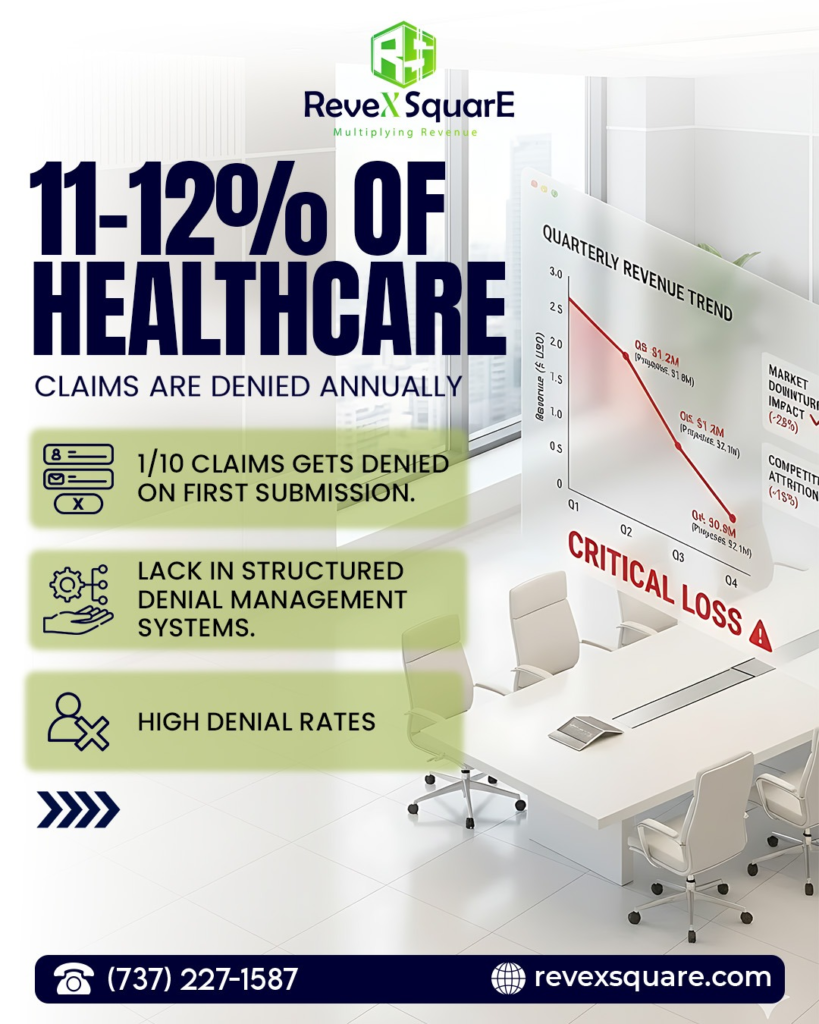
Studies indicate that roughly 11–12% of all healthcare claims submitted to insurance companies are denied each year. For large healthcare systems processing thousands of claims daily, this translates into millions of dollars in delayed or lost revenue.
Common Types of Claim Denials
Healthcare claim denials generally fall into several categories:
Technical Errors
- Missing patient information
- Incorrect billing codes
- Invalid insurance details
Eligibility Issues
- Patients not covered on the service date
- Expired insurance policies
- Incorrect insurance verification
Policy Exclusions
- Services not covered by the insurance plan
- Procedures requiring prior authorization
Even a 1% improvement in claim approval rates can help hospitals recover millions in revenue annually.
1 in 10 Claims Gets Denied on First Submission
One of the most common challenges in medical billing claim denials is the rejection of claims during the initial submission.
Industry reports suggest that about 10% of healthcare claims are denied the first time they are submitted.
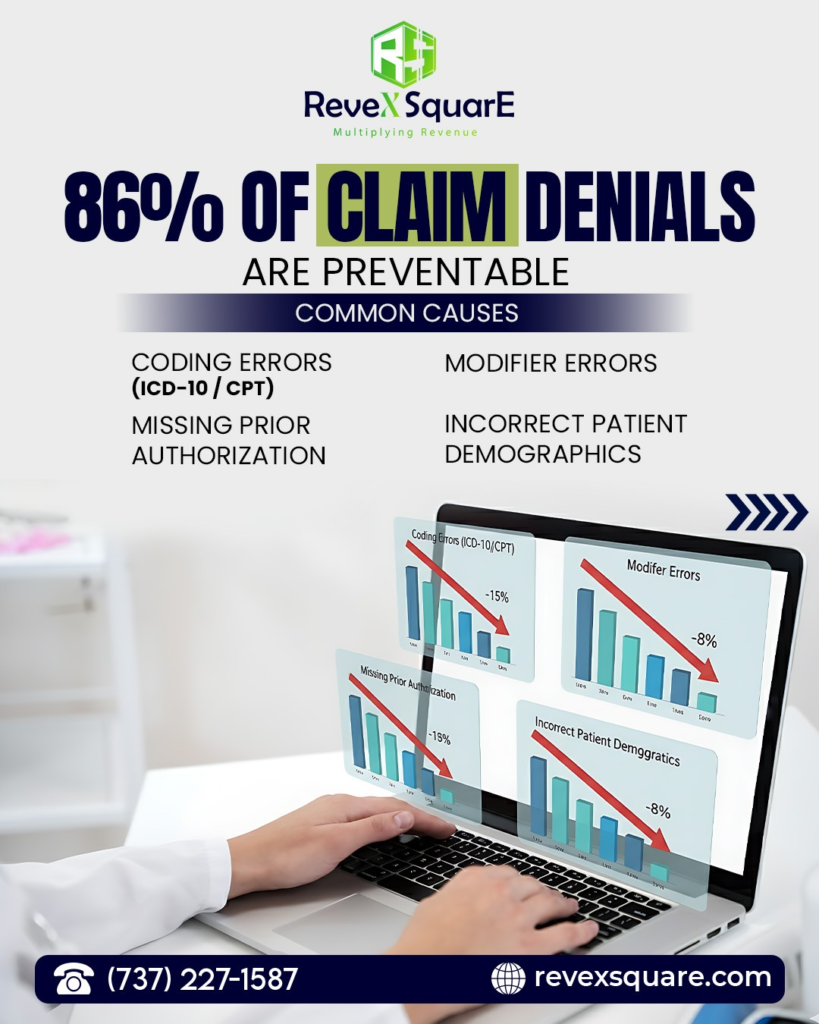
Common Causes of First-Time Claim Denials
- Coding Errors– Using outdated or incorrect CPT, ICD-10, or HCPCS codes is a frequent cause of claim rejection.
- Incomplete Documentation– Missing physician notes, signatures, or medical records can result in immediate claim denial.
- Incorrect Patient Demographics– Simple mistakes such as incorrect date of birth, insurance ID numbers, or patient names can prevent claims from being processed.
When claims are denied during the first submission, healthcare providers must spend additional time correcting and resubmitting claims, increasing administrative workload and delaying reimbursements.
Hospitals Spend Billions Reworking Denied Claims
Handling denied claims is extremely costly for healthcare organizations.
Research shows that hospitals and healthcare providers spend approximately $25 billion each year correcting and resubmitting denied claims.
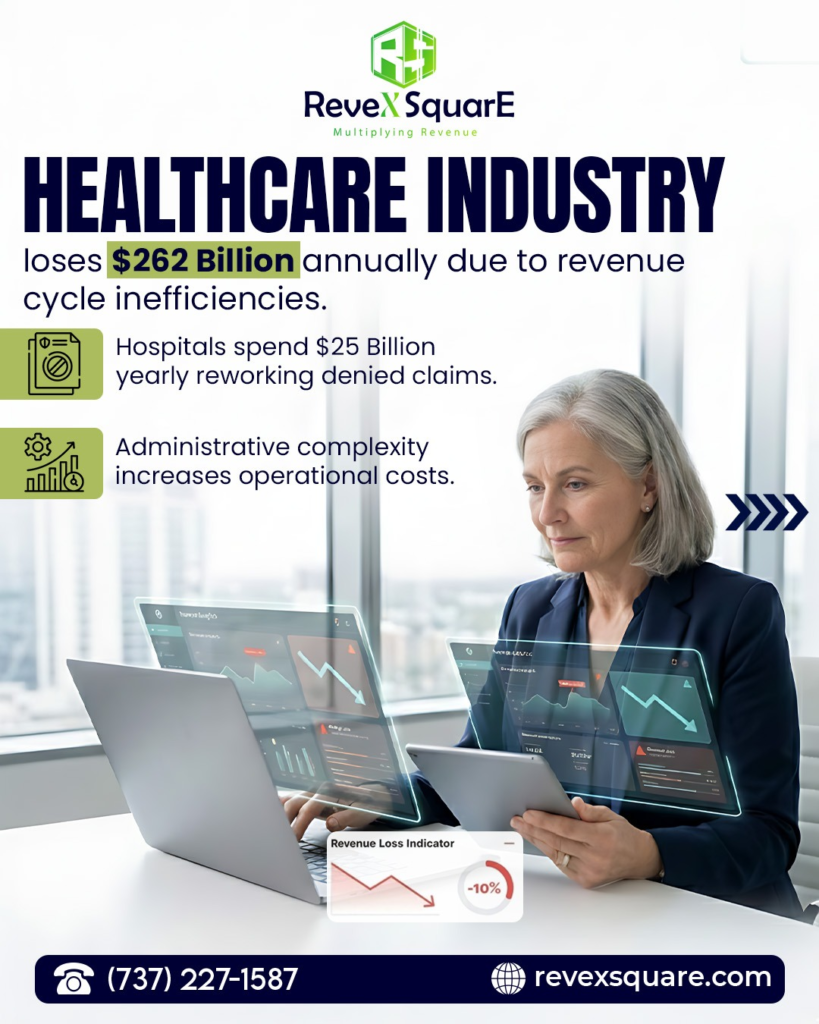
The administrative cost of processing a single denied claim can range from $25 to $118, depending on the complexity of the issue.
Operational Impact of Claim Denials
Denied claims create several operational challenges:
- Billing teams spend significant time reviewing documentation
- Staff must correct coding or patient data errors
- Claims must be resubmitted or appealed
- Payments can be delayed by 30 to 90 days
Even after resubmission, only 54–63% of denied claims are successfully recovered, leaving many claims written off as permanent revenue loss.
Major Causes of Healthcare Claim Denials
Understanding the root causes of claim denials is essential for improving healthcare claim denial management and reducing revenue leakage.
Below are the most common reasons healthcare claims are denied.
Coding Errors (ICD-10 and CPT)
Coding errors remain one of the leading causes of claim denials in healthcare.
These errors occur when incorrect or outdated ICD-10 diagnosis codes or CPT procedure codes are used during claim submission.
Examples include:
- Incorrect diagnosis code selection
- Improper code sequencing
- Unbundling services incorrectly
- Missing CPT procedure codes
Industry studies estimate that coding errors contribute to roughly 18–22% of healthcare claim denials.
Accurate coding, proper documentation, and regular coding audits are essential for reducing these errors.
Read More : 7 Proven Internal Medicine CPT Codes That Trigger Claim Denials
Missing Prior Authorization
Many insurance providers require prior authorization before specific procedures, imaging tests, medications, or specialist visits can be performed.
If authorization is not obtained or expires before the service date, the claim may be denied.
Recent healthcare revenue cycle data shows that 20–25% of claim denials are related to prior authorization issues.
These denials are especially common for:
- Radiology services
- Oncology treatments
- Durable medical equipment (DME)
- Specialty procedures
Proper authorization tracking and verification before services are delivered can significantly reduce these denials.
Incorrect Patient Demographics
Front-end registration errors are another major contributor to medical billing claim denials.
Examples include:
- Incorrect patient name spelling
- Wrong date of birth
- Invalid insurance ID numbers
- Outdated insurance policies
- Incorrect addresses
Research indicates that approximately 12% of claims contain demographic errors, which can lead to automated claim rejection.
Implementing real-time insurance verification and confirming patient details during every visit can reduce these preventable errors.
Modifier Errors
Modifiers provide additional information about medical procedures and services.
Incorrect or missing modifiers can cause insurance payers to interpret claims incorrectly, resulting in denials.
Common modifier mistakes include:
- Missing modifier -25
- Incorrect use of modifier -59
- Missing bilateral modifier -50
Modifier errors contribute to 10–28% of healthcare claim denials, particularly in surgical and outpatient services.
Proper training and payer-specific coding guidelines are essential to prevent these errors.
Administrative Complexity in Healthcare Billing
Administrative complexity is another major factor contributing to rising claim denial rates.
Healthcare providers must navigate:
- Insurance eligibility verification
- Prior authorization requirements
- Coding compliance rules
- Payer-specific claim submission guidelines
- Regulatory changes
Reports suggest that administrative processes account for a significant portion of healthcare spending in the United States, where healthcare already represents about 18% of GDP.
As payer rules continue to evolve, healthcare organizations must invest in stronger revenue cycle management services to reduce billing errors and improve efficiency.
How Healthcare Organizations Can Reduce Claim Denials
Reducing claim denials requires a proactive approach to denial management in medical billing.
Healthcare providers can significantly improve claim acceptance rates by implementing structured billing processes.
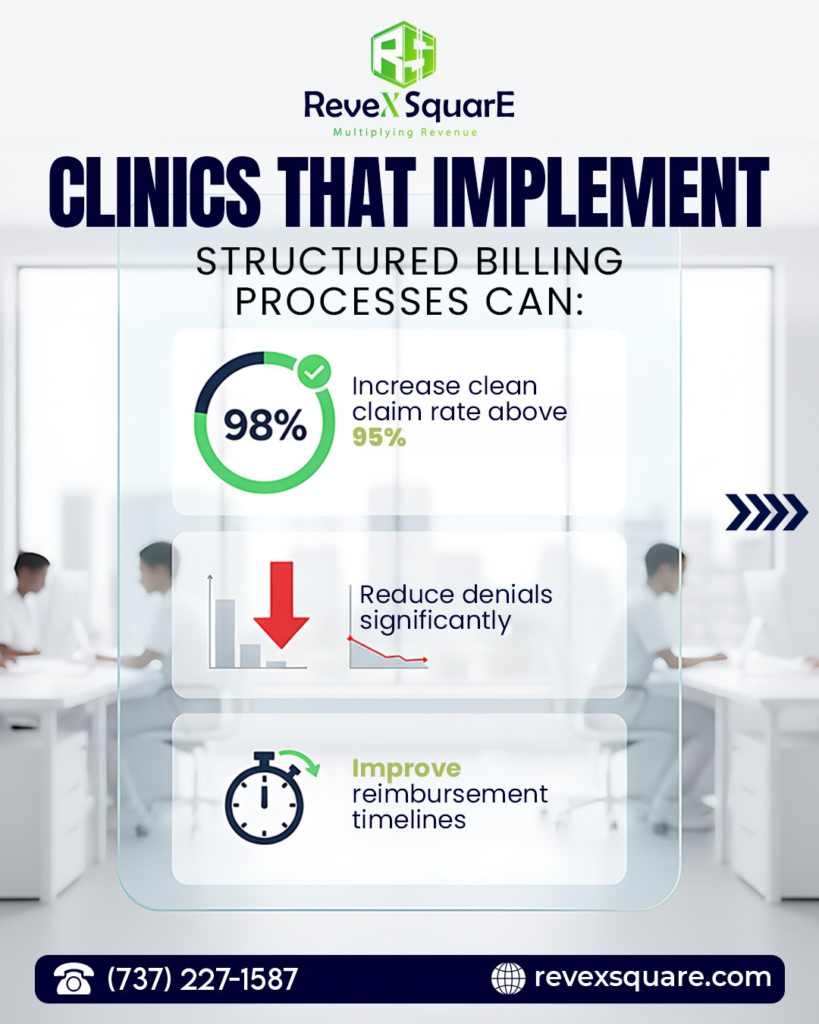
Increase Clean Claim Rate Above 95%
A clean claim is a claim submitted without errors or missing information.
Healthcare organizations can increase their clean claim rate by:
- Verifying patient insurance before services
- Ensuring accurate medical coding
- Reviewing claims before submission
- Implementing claim scrubbing tools
High-performing healthcare organizations often maintain clean claim rates above 95%.
Implement Structured Denial Management
A structured healthcare claim denial management system helps organizations track and analyze denied claims.
Benefits include:
- Identifying patterns in denial reasons
- Prioritizing claims with high recovery potential
- Reducing repetitive billing errors
- Improving overall revenue cycle efficiency
Modern RCM software and analytics tools allow billing teams to detect issues before claims are submitted.
Use Automation and AI in Revenue Cycle Management
Healthcare organizations are increasingly adopting AI-driven revenue cycle management tools to reduce billing errors.
Automation can help with:
- Claim scrubbing
- Eligibility verification
- Coding validation
- Denial prediction
- Payment tracking
Some healthcare organizations expect millions in cost savings by implementing AI-powered billing automation by 2026.
How Revex Square Helps Reduce Healthcare Claim Denials

Effective medical billing services can significantly reduce claim denials and improve financial performance for healthcare providers.
Revex Square supports healthcare practices by strengthening their revenue cycle management processes through:
- Accurate medical coding and documentation
- Insurance eligibility verification
- Prior authorization management
- Claim scrubbing and error detection
- Denial analysis and appeal support
With experienced billing specialists and advanced RCM strategies, healthcare providers can reduce denial rates, improve clean claim rates, and maintain consistent cash flow while focusing on patient care.
Conclusion
Healthcare claim denials remain one of the most significant financial challenges facing hospitals, clinics, and medical practices today. With 10–20% of claims denied annually, billions of dollars are lost due to revenue cycle inefficiencies, administrative complexity, and preventable billing errors.
Many of these denials are caused by issues such as coding errors, missing prior authorizations, incorrect patient demographics, and incomplete documentation. These problems not only delay reimbursements but also increase administrative workload and operational costs.
By implementing structured denial management processes, improving coding accuracy, verifying insurance eligibility, and leveraging modern revenue cycle management tools, healthcare organizations can significantly reduce claim denials and protect their revenue.
As the healthcare industry continues to evolve, organizations that invest in efficient billing systems and proactive denial management strategies will be better positioned to maintain financial stability while delivering quality patient care.
Frequently Asked Questions (FAQ)
Why do healthcare claims get denied?
Healthcare claims are commonly denied due to coding errors, missing prior authorization, incorrect patient demographics, incomplete documentation, or insurance eligibility issues.
What percentage of healthcare claims are denied?
Industry studies show that approximately 10–20% of healthcare claims are denied annually, making denial management a critical part of revenue cycle management.
Can healthcare claim denials be prevented?
Yes. Research suggests that up to 86% of healthcare claim denials are preventable through accurate coding, proper documentation, insurance verification, and structured billing processes.
What is denial management in medical billing?
Denial management refers to the process of identifying, analyzing, correcting, and resubmitting denied insurance claims to recover revenue and improve billing efficiency.