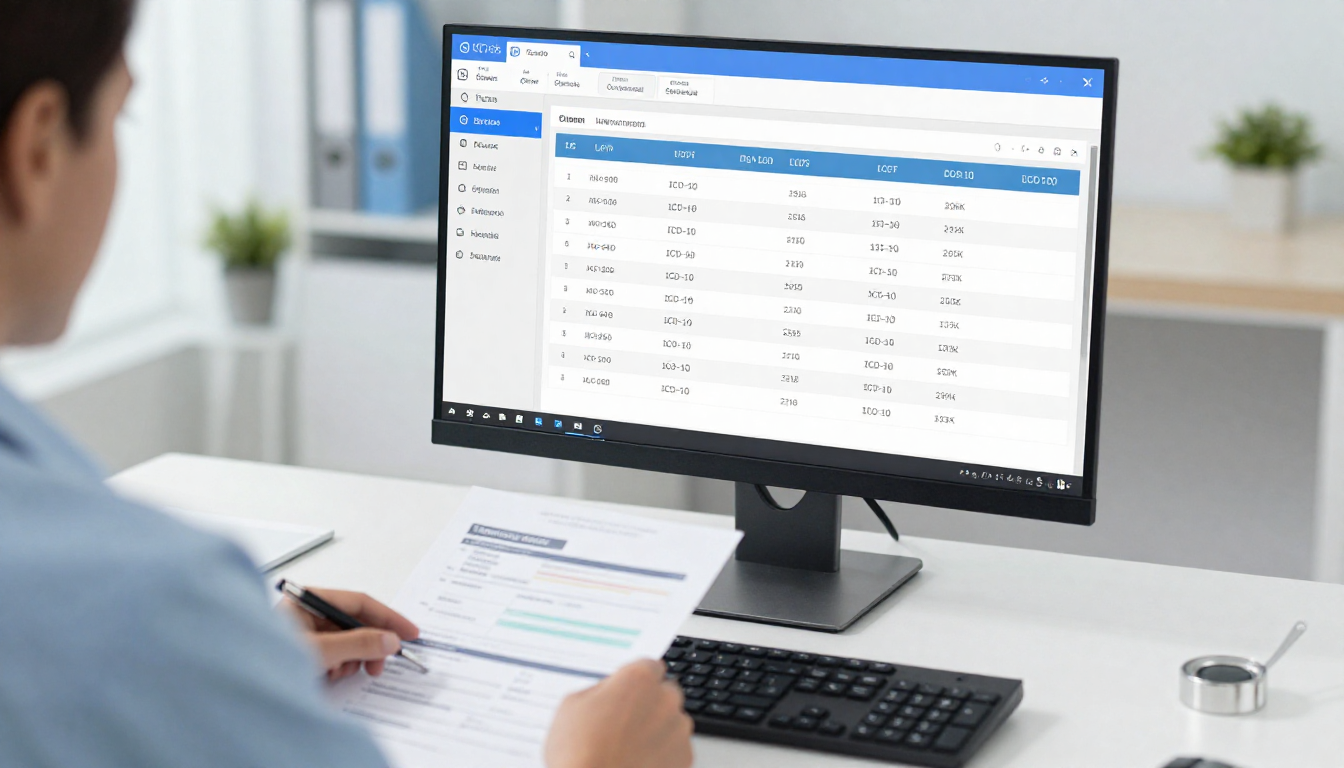







Correct ICD-10 coding plays a key role in proper medical billing and getting paid on time. Even small mistakes in coding can cause claim rejections, payment delays, and compliance issues. Healthcare providers need to focus on accurate coding to keep their revenue cycle running smoothly.
In 2026, errors in ICD-10 coding continue to be a major cause of claim denials. Research shows that inaccuracies in coding and insufficient documentation account for a large share of the approximately 15-17% denial rate seen in Medicare Advantage and commercial insurance plans. With payers now relying more heavily on AI-based analytics, even small discrepancies in coding are quickly identified, making accuracy more critical than ever.
Below are some common ICD-10 coding mistakes and ways to avoid them.
- Use of Outdated or Inaccurate ICD-10 Codes
ICD-10 codes are revised every year by the Centers for Medicare & Medicaid Services (CMS). Submitting claims with old or incorrect codes can frequently lead to denials or rejections.
Example: If a provider reports M54.5 (Low back pain) instead of the updated code M54.50 (Low back pain, unspecified), the claim could be rejected.
Solution
Medical coding services should aligned with the latest ICD-10 CM updates to prevent such errors.
- Insufficient Detail in Diagnosis Coding
ICD-10 requires a high level of detail. Using vague or unspecified codes can lead to a higher chance of claim denials.
Example: Rather than selecting J18.9 (pneumonia, unspecified organism), it is better to choose a more precise code such as J15.0 (pneumonia caused by Klebsiella pneumoniae) when the information is available.
Solution Facility coding services should ensure accurate and detailed coding based on complete clinical documentation.
- Errors in Laterality Coding
Numerous ICD-10 codes require specifying the affected side (right, left, or both). Omitting this detail or selecting the wrong side can result in claim denials.
Example: M25.561 (pain in the right knee) vs. M25.562 (pain in the left knee) assigning the incorrect side may cause the claim to be rejected.
Solution Medical coding services verify laterality coding by cross-checking with clinical records.
- Gender or Age Inappropriate Codes
Some medical codes apply only to specific genders or age groups. Using them incorrectly can result in instant claim rejection.
Example: Assigning code N40.0 (benign prostatic hyperplasia) to a female patient would be identified as an error.
Solution
Our compliance auditing team ensures that coding practices align with established demographic standards and requirements.
- Failure to Properly Connect Diagnosis Codes to Medical Necessity
Insurance payers expect ICD-10 diagnosis codes to clearly support and justify the procedures being billed. When the codes do not align with the treatment provided, claims are often rejected.
Example: Using R10.9 (unspecified abdominal pain) when billing for an appendectomy may lead to denial, as the diagnosis lacks the specificity needed to validate the procedure.
Solution: Our denial management services ensure accurate linkage between ICD-10 and CPT codes to support medical necessity.
Excessive Use of Non-Specific Codes
Non-specific codes should only be applied when precise clinical information is not available. Frequent use can trigger compliance concerns.
Example: The code C80.1 (Malignant neoplasm, unspecified site) should be avoided unless there is no alternative.
Solution:
- Improve Documentation: Require providers to record specific details (site, stage, severity).
- Educate Staff: Train providers and coders on using specific codes instead of non-specific ones.
- Audit Coding: Regularly review charts for vague codes and provide feedback.
- Use Decision Support: Implement EHR alerts or CDI programs to suggest specific codes.
- Encourage Collaboration: Coders query clinicians for clarification instead of defaulting to unspecified codes.
This approach reduces compliance risk and improves coding accuracy.
- Improper ICD-10 Code Order
Certain medical scenarios require that primary and secondary ICD-10 codes appear in a specific sequence. Listing them incorrectly can lead to claim rejections.
Example: For diabetes with complications, E11.621 (Type 2 diabetes mellitus with foot ulcer) should be listed before the ulcer code L97.529.
Solution: The coding team should strictly adhere to ICD-10 sequencing rules to ensure claims are submitted accurately and accepted without delays.
Omission of External Cause Codes For injuries and accidents, many insurers mandate including external cause codes (V, W, X, Y series) to describe the event leading to the injury.
Example: If a patient sustains injuries in a car crash, an external cause code such as V43.52XA (Driver injured in collision with a truck, initial encounter) should be added along with the primary injury code.
Solution: Make sure all necessary external cause codes are included, giving a full and accurate picture for each claim.
- Incorrect Use of Combination Codes
Some conditions have combination codes that include manifestations and underlying conditions. Not using them properly is a frequent mistake.
Example: Using I50.9 (Heart failure, unspecified) and separately coding I25.10 (Atherosclerotic heart disease) instead of a single combination code if available.
Solution: Check for combination codes that capture both conditions.
Conclusion
Accurate ICD-10 coding is essential for timely medical billing, claim approval, and compliance. Errors in coding whether due to outdated codes, lack of specificity, incorrect laterality, demographic mismatches, improper linkage to medical necessity, misuse of non-specific or combination codes, sequencing mistakes, or missing external cause codes are a major contributor to claim denials.
Healthcare providers and coding teams must prioritize precision, up-to-date knowledge, thorough documentation, and proper coding practices. Implementing measures such as regular audits, staff training, decision support tools, and effective collaboration between coders and clinicians can significantly reduce errors, improve claim acceptance rates, and maintain a smooth revenue cycle. Accurate, detailed, and compliant ICD-10 coding is critical to minimize denials, optimize reimbursement, and ensure regulatory compliance in 2026 and beyond.
Boost your coding accuracy and streamline claims effortlessly partner with Revex Square for precise ICD-10 coding and seamless claim processing.
FAQS
1. How do ICD-10 coding errors affect my insurance claims?
Inaccurate or incomplete ICD-10 codes can lead to claim denials or delays, meaning your insurance may not pay for a procedure on time. Correct coding ensures that your treatment is properly documented and reimbursed.
2. Can using vague or unspecified codes impact my medical bills?
Yes. Using non-specific codes may trigger insurance denials or require additional documentation. Accurate, detailed codes reduce delays and help avoid unexpected out-of-pocket costs.
3. Why do insurers require demographic-specific codes?
Certain conditions only apply to specific genders or age groups. Using a code that doesn’t match your demographic can result in claim rejection, as the insurer flags it as invalid for your profile.
4. What happens if the diagnosis doesn’t match the procedure in my claim?
Insurance payers need the diagnosis to justify the procedure. If the ICD-10 code doesn’t align with the treatment, such as billing an appendectomy under a vague abdominal pain code, the claim may be denied.
5. How can patients ensure smooth claim processing related to ICD-10 coding?
You can help by providing complete and accurate medical history, reporting all symptoms clearly, and confirming that your provider’s document diagnoses precisely. This supports accurate coding and faster insurance approvals.