









Take a familiar scenario. A therapist documents a 45-minute session and bills it as a 60-minute session because that code pays more. The claims pay for months. Then a payer audit arrives and the practice owes money back on every session coded that way.
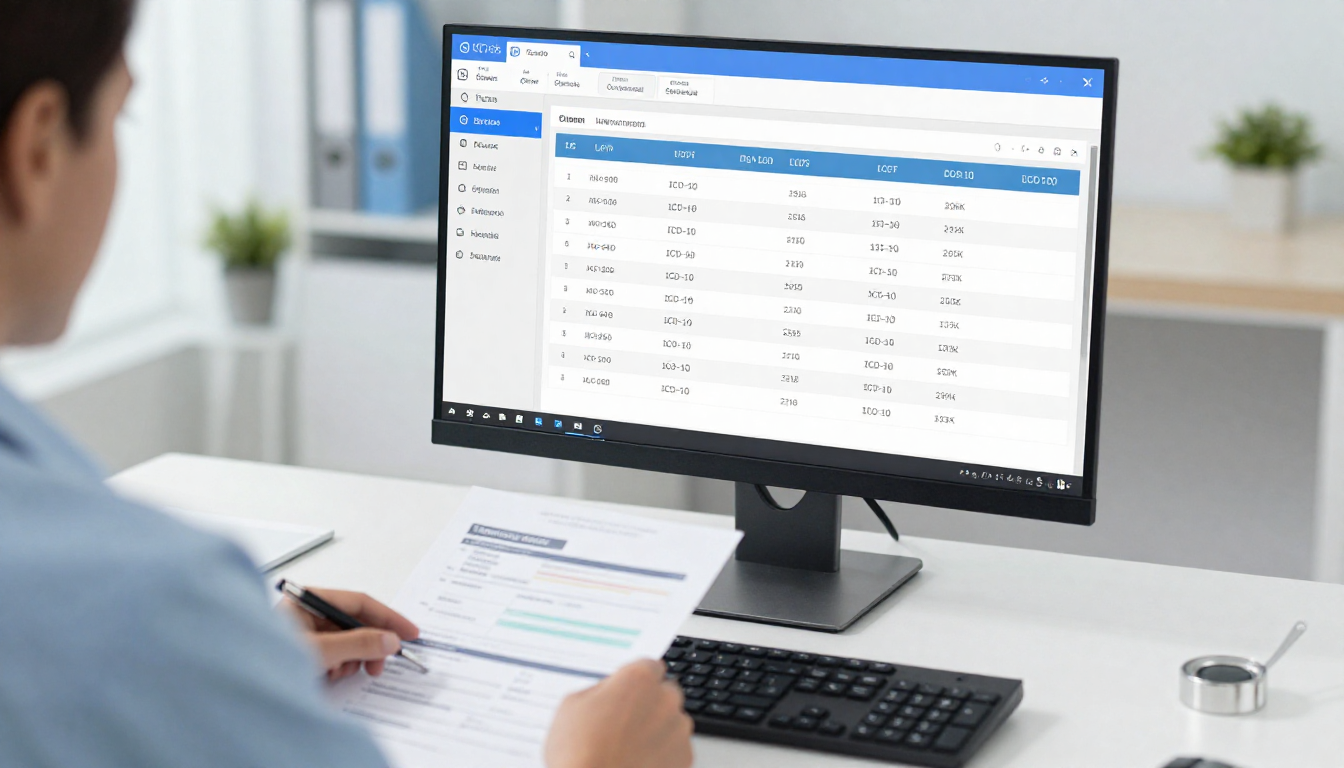
Mental health billing services exist to prevent this kind of problem. They handle the work between a finished session and a payment in your account: verifying benefits, coding to your documentation, submitting claims, chasing denials and reporting what was actually collected. This guide covers what that work involves, where mental health claims fail, what outsourcing costs, and how to judge a billing company before you sign a contract.
What mental health billing services include
Mental health billing services manage the revenue cycle for therapy and psychiatric practices, from benefits verification through final payment posting. Scope differs from one company to another, so confirm each item below instead of assuming it is covered.
- Eligibility and benefits verification: Confirms active coverage, copay, deductible, session limits, and whether behavioral health is managed by a separate vendor, all before the first appointment.
- Coding review: Matches CPT and ICD-10 codes to what the clinician actually documented.
- Claim submission: Sends clean claims electronically through your EHR or a clearinghouse.
- Payment posting and reconciliation: Compares each payment to your contracted rate so underpayments get caught.
- Denial management and appeals: Finds the root cause, corrects the claim, and appeals with supporting documentation.
- Patient billing: Statements for copays, coinsurance and deductibles.
- Credentialing and enrollment support: Not every company offers this, so ask.
- Reporting: Denial rate, first-pass acceptance rate and accounts receivable aging by payer.
Who uses behavioral/psychiatric /Mental health billing services
Billing needs change with the type of provider, which is why a generic medical billing arrangement often misses details in behavioral health.
| Provider type | What makes their billing different |
| Solo therapists (LPC, LCSW, LMFT) | Low claim volume but a heavy admin load per claim. Payer enrollment is often the bottleneck. |
| Group therapy practices | Many rendering providers under one billing entity. Every clinician must be credentialed with every payer, and supervision rules apply to pre-licensed staff. |
| Psychiatrists and psychiatric NPs | E/M codes with psychotherapy add-ons. Medication management documentation drives the level of service. |
| Psychologists | Psychological and neuropsychological testing codes (the 96130 to 96139 range) often need authorization. |
| Telehealth and hybrid practices | Place-of-service and modifier accuracy across payers and states. |
| IOP, PHP and substance use programs | Level-of-care billing, concurrent authorization reviews, and added privacy rules under 42 CFR Part 2 for covered substance use records. |
| Community behavioral health organizations | Medicaid managed care rules plus contract and grant reporting alongside claims. |
CPT codes that drive mental health billing
A practical table for the Revex Square mental health billing services article. Time ranges reflect the documented psychotherapy time. Confirm payer coverage, documentation rules, and current code guidance for each claim.
| CPT code | Service | Use or time | Common billing error |
| 90791 | Psychiatric diagnostic evaluation | Evaluation without medical services | Repeating the evaluation without documenting why another diagnostic interview is needed. |
| 90792 | Psychiatric diagnostic evaluation with medical services | Evaluation with a documented medical component by an eligible clinician | The record does not support the medical services reported. |
| 90832 | Individual psychotherapy | 16–37 minutes | Using this code when documented psychotherapy time supports a longer code. |
| 90834 | Individual psychotherapy | 38–52 minutes | Billing when documented psychotherapy time is below 38 minutes. |
| 90837 | Individual psychotherapy | 53 minutes or more | Billing routinely without documentation of the time and medical necessity. |
| 90846 / 90847 | Family psychotherapy | Without patient / with patient present; check payer rules | Assuming both services are covered without checking plan requirements. |
| 90853 | Group psychotherapy | Report for each eligible participating patient | Record does not support the individual patient’s participation and service. |
| 90785 | Interactive complexity add on | Qualifying communication factors; report with an eligible primary service | Adding it to routine encounters without documenting qualifying factors. |
| 90839 / 90840 | Psychotherapy for crisis | First 60 minutes / each additional 30 minutes | Crisis assessment and intervention are not supported by the record. |
| 90833 / 90836 / 90838 | Psychotherapy add on with E/M | 16–37 / 38–52 / 53+ minutes of psychotherapy | Counting the same minutes toward both time based E/M and psychotherapy. |
Editorial note. These are common outpatient mental health codes, not an exhaustive code list. Crisis psychotherapy and psychotherapy with E/M have additional same day and payer rules. Verify the actual record and payer policy before submitting claims.
The AMA CPT code set is the authority on code definitions, and each payer adds its own coverage rules on top. Check both before you build a workflow around a code.
Telehealth billing for therapy sessions
Telehealth therapy claims fail most often on place of service and modifiers. There is no single national standard, so the correct combination depends on the payer.
- Place of service. POS 10 is used when the patient is at home. POS 02 is used for telehealth delivered somewhere other than the patient’s home.
- Modifiers. Modifier 95 identifies synchronous audio-video services. Some payers still want GT. Modifier 93 identifies audio-only services where a payer allows them.
- Licensure. In most cases the clinician must hold a license in the state where the patient is located during the session.
Medicare telehealth rules for mental health, including in-person visit requirements, have changed several times through Congress and CMS. Check the current CMS guidance before setting your workflow, and keep a payer-by-payer telehealth rules sheet that you review every quarter.
Why mental health claims get denied
Most mental health denials trace back to a small number of preventable causes. Knowing them lets you fix the source instead of resubmitting the same claim.
| Cause | What happens | How to prevent it |
| Inactive or carved-out coverage | Denied for eligibility, or sent to the wrong payer | Verify benefits before every new episode of care and again at the start of the plan year. Identify the behavioral health vendor. |
| Provider not credentialed | Denied because the rendering provider is not enrolled | Confirm the effective date before scheduling insured patients. |
| Time and code mismatch | Downcoding, denial or a repayment demand | Have clinicians record total session time in every note. |
| No authorization or visits exceeded | Denied after service and hard to overturn | Track authorization numbers and remaining visits by patient. |
| Telehealth POS or modifier error | Denied or paid at the wrong rate | Keep a current rules sheet for each payer. |
| Diagnosis does not support the service | Medical necessity denial | Use a specific primary diagnosis, and document symptoms, functional impact, treatment plan and progress. |
| Timely filing missed | Usually unrecoverable | Submit within days. Medicare allows 12 months from the date of service, but many commercial payers allow far less. |
| Duplicate or overlapping claims | Rejected | Check claim status before resubmitting. |
When you interview a billing company, ask to see denial reasons grouped by category from a real account with patient details removed. A company that cannot show this is probably not tracking causes.
Why behavioral health accounts receivable ages
Behavioral health accounts receivable ages because therapy is recurring. One wrong policy ID in a chart can repeat across twenty sessions before anyone notices, so a small front-end error turns into a large unpaid balance.
Three other patterns add to it. Payers sometimes pay below the contracted rate and nobody compares the payment to the contract. Patients with high deductibles stop attending when balances build. And follow-up slows down when denials pile up without an owner. To reduce behavioral health accounts receivable, work aged claims by payer every week, fix the cause at the source, collect patient responsibility at the time of service, and review anything older than 60 and 90 days on a fixed schedule.
Credentialing comes before billing
Credentialing is the payer’s approval for a clinician to bill and be paid in its network. Timelines often run 90 to 120 days and sometimes longer, and a payer does not always backdate the effective date.
- Keep the clinician’s CAQH profile complete and re-attested on schedule.
- Make sure the NPI record in NPPES matches the name, taxonomy and practice address you submit.
- Start applications at least three to four months before a new clinician sees insured patients.
- Do not bill under another clinician’s name to bridge the gap. Payers treat that as a compliance problem.
What outsourced mental health billing services costs
Billing companies charge in three ways: a percentage of collections, a flat monthly fee, or a fee per claim. The right one depends on your volume and how predictable your collections are.
| Model | How it works | What to check |
| Percentage of collections | A fixed percentage of the payments collected | Whether it applies to self-pay and patient payments, and what services are included at that rate |
| Flat monthly fee | Same amount each month | You pay in full even in a slow month |
| Per-claim fee | A set amount per claim submitted | Cost rises with volume, and some vendors charge for resubmissions |
Here is the arithmetic, using illustrative numbers. A practice collecting $30,000 a month pays $1,200 at 4 percent and $825 at 2.75 percent. Revex Square pricing starts at 2.75 percent of monthly collections, and the final rate depends on volume, payer mix and the services included.
A fee only means something next to what it replaces. Compare it to an in-house biller’s salary, benefits, software, training and leave coverage, plus the revenue you lose when follow-up is slow. If you want to outsource psychiatric billing services or therapy billing, also ask about costs that sit outside the quoted percentage:
- Onboarding or setup fees
- Credentialing and enrollment charges
- Patient statement and collections fees
- Minimum monthly fees
- Termination fees and who keeps the data if you leave
In-house billing vs outsourced billing
| Factor | In-house | Outsourced |
| Cost structure | Salary, benefits, software, training | Percentage, flat or per-claim fee |
| Coverage during leave | Billing stops or falls behind | Team continues |
| Payer rule tracking | Depends on one person’s knowledge | Shared across a team working many payers |
| Control | Full, day to day | Depends on reporting and contract terms |
| Best fit | Low insurance volume, strong internal billing skill | Growing practices, multiple clinicians, high denial rates |
When outsourcing is a poor fit
- You see only a handful of insured sessions a week and are mostly self-pay.
- Your clinical documentation is inconsistent. A billing team cannot fix a missing note.
- You are not ready to share access to your EHR or payer portals.
How to choose a behavioral health billing company
A good behavioral health billing company can answer specific questions about your payers and your codes. Use these to test any vendor, including us.
- Ask which telehealth modifier and POS combinations they use for your top five payers.
- Ask how they handle 90837 reviews and time documentation: A vague answer means they have not managed audits.
- Ask what the monthly report contains. You want denial rate, first-pass acceptance rate and A/R aging by payer, not only total collections.
- Confirm they work inside your EHR, such as SimplePractice, TherapyNotes or TheraNest, so you are not forced to switch.
- Ask who owns your payer portal logins and data if the contract ends.
- Read the contract term, notice period and exit fees before you sign.
- Speak to a current client with a practice like yours.
- Confirm HIPAA safeguards, including a signed business associate agreement.
How Revex Square handles mental health billing services
Revex Square provides behavioral and mental health billing services for psychiatrists, therapists, psychologists, clinics, and inpatient facilities, with eligibility verification, coding, claim submission, denial management, accounts receivable follow-up, and credentialing support under one team. Our published rates start at 2.75 percent of monthly collections.
For new patients, our team verifies insurance eligibility and behavioral health benefits before services are billed whenever patient and insurance information is available in advance. We review active coverage, copays, deductibles, coinsurance, behavioral health benefits, authorization requirements, visit limitations, and other payer-specific requirements that could affect reimbursement.
Behavioral health claims are reviewed by experienced billing and certified medical coding professionals who understand mental health documentation, CPT and ICD-10-CM coding, time-based services, modifiers, payer policies, and the relationship between the services billed and the supporting clinical documentation. Our team can review therapy notes, progress notes, treatment documentation, and other available records before claim submission to help identify documentation or coding issues that could result in denials.
We work within the systems already used by behavioral health practices, including Therapy Notes, Simple Practice, Valant, Advanced MD, Tebra/Kareo, athena health, and other EHR and practice-management platforms. Rather than requiring a practice to change its existing system, our billing team adapts to the client’s current clinical and administrative workflow.
Clients receive regular revenue-cycle reporting covering collections, claims submitted and paid, outstanding accounts receivable, A/R aging, rejected and denied claims, payer trends, unresolved claims, and follow-up activity. We also highlight recurring billing issues and areas that may require action from the practice.
During a new client’s first 30 days, we review the existing billing workflow, payer mix, provider enrollment and credentialing status, EHR and clearinghouse setup, outstanding A/R, previous denials, eligibility and authorization processes, and current claim activity. Our team then begins managing new claims and follow-up while creating an action plan for older balances, recurring denials, and other revenue-cycle issues identified during onboarding.
If you want a second look at your current billing, book a free billing review and we will go through your last 90 days of denials with you.
Frequently asked questions about mental health billing services
What are mental health billing services?
Mental health billing services are outsourced or specialist services that handle insurance billing for therapists, counselors, psychologists and psychiatric providers. They verify benefits, assign CPT and ICD-10 codes, submit claims, work denials and appeals, post payments and report collections.
How much do mental health billing services cost?
Most companies charge a percentage of collections, a flat monthly fee or a fee per claim. Revex Square rates start at 2.75 percent of monthly collections. The final price depends on claim volume, payer mix and whether credentialing and patient billing are included.
Who can bill insurance for mental health billing services?
Licensed psychiatrists, psychologists, clinical social workers, professional counselors, marriage and family therapists, and psychiatric nurse practitioners can bill, subject to state licensure and each payer’s credentialing rules. Medicare has enrolled marriage and family therapists and mental health counselors since January 1, 2024.
What is the difference between CPT 90834 and 90837?
90834 is psychotherapy of 38 to 52 minutes. 90837 is psychotherapy of 53 minutes or more. The code must match the documented session time, and using 90837 for most sessions can draw payer review.
How do you bill telehealth therapy sessions?
Bill the same CPT code as an in-person session with the payer’s required place of service and modifier. Commonly that is POS 10 for a patient at home or POS 02 elsewhere, with modifier 95 for audio-video. Rules differ by payer, so verify each one.
Why are mental health claims denied so often?
The most common causes are inactive or carved-out coverage, a clinician who is not credentialed, mismatched time and codes, missing authorization, telehealth setup errors and weak medical necessity documentation. Most are preventable at the front end.
Do I need to change my EHR to use a billing company?
Usually not. Many billing companies work inside your existing EHR or practice management system, including SimplePractice, TherapyNotes and TheraNest. Confirm this before signing and ask what level of access the team needs.
How long does insurance credentialing take for a therapist?
Often 90 to 120 days, and sometimes longer depending on the payer and the completeness of the application. Payers do not always backdate the effective date, so apply well before the first insured session.
What is the difference between mental health billing and behavioral health billing?
Mental health billing services usually refers to therapy and psychiatric services. Behavioral health is broader and can include substance use treatment, intensive outpatient programs and other services with their own codes, authorization rules and privacy requirements.
Is outsourcing billing worth it for a solo therapist?
It can be if you see a steady number of insured clients and are losing time or revenue to denials and follow-up. It is a weaker fit if you are mostly self-pay or your documentation is inconsistent. Compare the fee to your time and to the revenue you are not collecting.
Next step
If denials, slow payments or credentialing delays are affecting your practice, contact Revex Square at info@revexsquare.com for a review of your current billing.