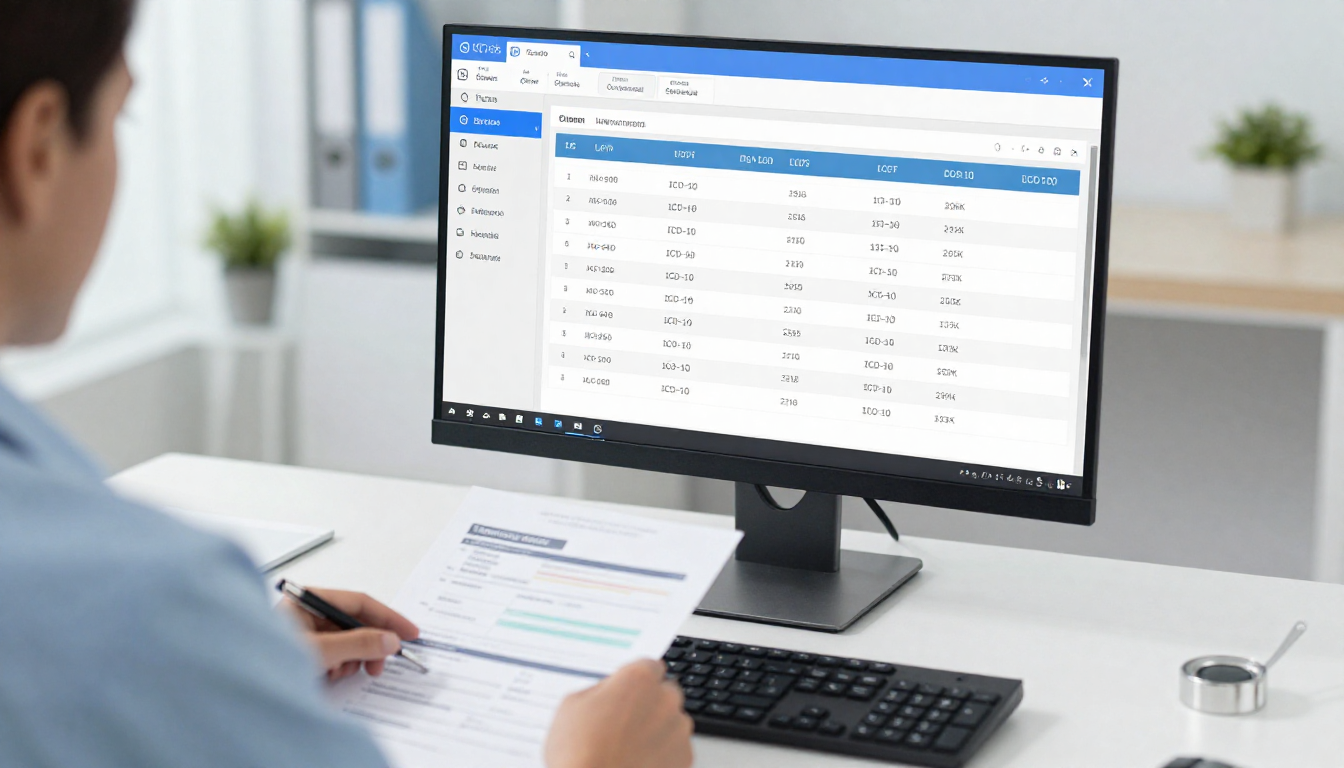








About 80% of medical bills in the U.S. contain errors. That’s a serious issue. A large number of these problems stem from incorrect coding, which can lead to claim denials, delayed payments, and frustration for both healthcare staff and patients.
Medical coding plays a crucial role in the billing process; it’s essentially what keeps everything running smoothly. When errors occur, they can waste valuable time and lead to financial losses. Whether you run a small clinic or manage a large hospital, identifying and correcting these mistakes is essential for maintaining steady cash flow.
Here are top CPT Codes that Causes Errors in Medical Billing Services:
CPT 99213
CPT code 99213 is a standard Evaluation and Management (E/M) code for outpatient appointments with established patients. It corresponds to a Level 3 visit, generally involving low-complexity medical decision-making (MDM) or a total time of 20-29 minutes spent on the day of the visit.
Common issues
- Incorrect Documentation Level
The medical record does not support the level of service billed. For example, 99213 requires documentation of at least 2 of the 3 key components (history, exam, and medical decision-making) or time spent if billing by time.
Mistakes:
- The physician documents a brief encounter but bills 99213 instead of 99212.
- History or exam is incomplete or insufficient to justify the level.
Impact: May lead to audits, payment denials, or the need for corrected claims.
- Missing Clinical Details
Important clinical information is not documented, making it hard to justify the service.
Missing details can be:
- Chief complaint or reason for visit.
- Assessment or plan.
- Relevant past medical history or current medications.
- Test results or follow-up instructions.
Impact: Insufficient documentation can result in the payer denying the claim or reducing the reimbursement.
- Up Coding or Under Coding
- Up coding: Billing a higher-level code than what the documentation supports.
Example: Billing 99214 instead of 99213 when the visit only meets 99213 criteria.
Risk: Can trigger audits and potential penalties for fraud. - Under coding: Billing a lower-level code than appropriate.
Example: Billing 99212 when documentation supports 99213.
Risk: Loss of revenue for services actually provided.
How to fix it
Ensure proper E/M documentation guidelines
To ensure proper E/M documentation for CPT 99213, document a problem-focused history, a problem-focused exam of affected systems, and moderate complexity medical decision-making (addressing 2+ chronic/acute problems, reviewing relevant data, and noting low-risk management). Clearly link findings to diagnoses, include assessment and plan with labs, medications, or follow-up, and avoid vague statements. Documentation should justify the level of service, showing that the visit involved more than minimal evaluation but not the higher complexity of 99214.
CPT 99214
CPT code 99214 represents a commonly billed, level-4 Evaluation and Management (E/M) service for established patients. It applies to office visits that involve moderate-complexity medical decision-making or a total time spent of 25-39 minutes. Due to its frequent use, this code is often a focus during audits.
Common issues
1. Insufficient Documentation
This happens when the chart note does not fully support the level of service billed. For 99214, the requirements include:
a) History:
- Expanded problem-focused or detailed (chief complaint, history of present illness, review of systems, past/family/social history).
- Common mistake: Only documenting a brief statement or omitting relevant systems.
b) Examination:
- Detailed examination of at least 5 organ systems or body areas, or a problem-focused exam with MDM that justifies the complexity.
- Common mistake: Generic statements like “exam normal” without details, or only documenting 1 system when more are expected.
c) Medical Decision-Making (MDM):
- Moderate complexity MDM requires:
- Multiple diagnoses or management options,
- Moderate risk of morbidity/mortality,
- Moderate data review or management.
- Mistake: Failing to document the reasoning, data reviewed (labs, imaging, prior records), or risk assessment.
2. Incorrect Medical Decision Level
This happens when the complexity of the patient’s care doesn’t match 99214 criteria:
a) Over coding (billing too high):
- Example: Billing 99214 when the visit was simple, with minimal decision-making.
- Risk: Audit and claim denial.
b) Under coding (billing too low):
- Example: Billing 99213 when the visit required moderate complexity decisions.
- Risk: Lost revenue.
c) Documentation mismatch:
- Even if the patient is complex, if the note does not clearly describe the decisions made, it can’t legally support 99214.
Tips to avoid mistakes:
- Always document: patient complaints, review of systems, physical exam details, MDM reasoning, tests ordered/reviewed, and follow-up plan.
- Use structured templates or checklists to ensure all required elements are included.
How to fix
- Subjective (S):
Document a clear chief complaint, detailed HPI (location, severity, timing, associated symptoms), relevant ROS, and patient concerns/goals. - Objective (O):
Include vital signs, focused physical exam with specific findings, and any reviewed data (labs, imaging). - Assessment (A):
Record the primary diagnosis with ICD-10 code, note severity/acuity, and include differentials if relevant. - Plan (P):
Outline specific treatments, medication changes, referrals, patient education, and follow-up; include time if coding is time-based. - Support Medical Decision-Making:
Avoid vague terms (e.g.normal exam); provide detailed, specific documentation to justify 99214 complexity and reduce audit risk.
CPT 93000 (ECG)
CPT code 93000 refers to a comprehensive electrocardiogram ECG service that encompasses both the technical recording of the heart’s activity and the professional interpretation with a report. Claims for this code are often denied due to incomplete documentation, errors, or inclusion of services that are already covered elsewhere.
Common denial reasons
Missing Diagnosis Linkage
- What it means: The CPT code 93000 must be linked to an appropriate ICD-10 diagnosis code that justifies the medical necessity of the ECG.
- Common ICD-10 examples:
- I20.9 – Angina pectoris, unspecified
- R07.9 – Chest pain, unspecified
- I49.9 – Cardiac arrhythmia, unspecified
- Denial explanation: The claim is denied because the payer cannot verify why the ECG was medically necessary.
- Fix: Ensure a valid diagnosis code is linked to the CPT code during claim submission.
2. Duplicate ECG Billing
- What it means: The payer thinks the same service was billed more than once for the same patient on the same date.
- Common scenarios:
- Two claims submitted for 93000 on the same day.
- Multiple providers billing for the same ECG performed.
- Repeated ECGs without documented medical necessity.
- Denial explanation: Payers prevent overpayment by denying the second (or duplicate) claim.
- Fix:
- Verify if an ECG was already performed on that date.
- If multiple ECGs were medically necessary, ensure proper documentation and use modifier -59 (Distinct Procedural Service) if appropriate.
How to fix it
- Check patient notes – why was the ECG done (Chest pain, palpitations, hypertension, follow-up, etc.)
- Pick the right ICD-10 code – e.g.,
I10 – Hypertension
R94.31 – Abnormal ECG
R07.9 – Chest pain
- Link it in the EHR/billing system – make sure CPT 93000 matches the chosen ICD-10.
- Verify documentation – ensure the chart supports the diagnosis to avoid denials.
CPT 36415 (Blood draw)
CPT 36415 refers to the process of drawing venous blood through venipuncture, a common procedure usually carried out by non-physician staff such as nurses or phlebotomists for diagnostic purposes. This code is billed once per patient visit, no matter how many tubes are collected or attempts are made, and is frequently used for laboratory testing in clinics or hospital settings.
Common denial cause
- Duplicate billing
When both a hospital and a doctor submit charges for the same blood draw. - Bundling issues
(Incidental): Many insurance providers typically view the blood draw as included in the E/M service or as part of the lab test, rather than as a standalone procedure.
How to fix
- Usually bundled: Most payers, including Medicare, include 36415 in the payment for the lab test if it’s drawn for that test.
- Modifiers: Use -59 for distinct procedures if multiple draws; documentation is required.
Professional coding review guarantees precise CPT, ICD-10, and HCPCS code assignment in line with clinical documentation, significantly reducing claim denials and accelerating reimbursements. By ensuring adherence to payer-specific rules and proper modifier use, this process enhances revenue cycle management, lowers audit risks, and boosts first-pass claim acceptance rates.
Accurate CPT Application and Compliance: Certified coders confirm that all codes accurately represent the services provided, maintaining compliance with HIPAA, NCCI edits, and payer requirements. This helps avoid common pitfalls such as up coding or under coding, which can trigger audits.
Fewer Claim Denials: Comprehensive review addresses both clerical and clinical errors, including missing documentation, incorrect modifiers, or inaccurate diagnosis codes. Submitting clean claims reduces denials, which are a primary source of revenue loss; around 42% of physicians identify coding errors as a leading cause.
Quicker Reimbursements and Improved Cash Flow: By identifying and correcting errors before claims are submitted, clean claims are processed more quickly, reducing Accounts Receivable (AR) days and ensuring consistent, timely revenue.
Revex Square streamline medical billing by automatically reviewing CPT, ICD-10, and HCPCS codes for accuracy, highlighting missing documentation, and suggesting correct modifiers. By integrating seamlessly with EHR systems our team ensures:
- Proper linkage between diagnoses and procedures.
- Compliance with payer rules and documentation requirements.
- Reduced claim denials and faster reimbursement cycles.
Conclusion
Medical billing errors especially in common CPT codes like 99213, 99214, 93000, and 36415 are often caused by poor documentation, incorrect coding, and missing diagnosis links. These mistakes lead to claim denials, delays, audits, and revenue loss.
The solution is clear: ensure accurate documentation, proper code selection, correct ICD-10 linkage, and appropriate use of modifiers. Using expert coding reviews or automated tools can further reduce errors, improve claim approvals, and maintain steady cash flow.