









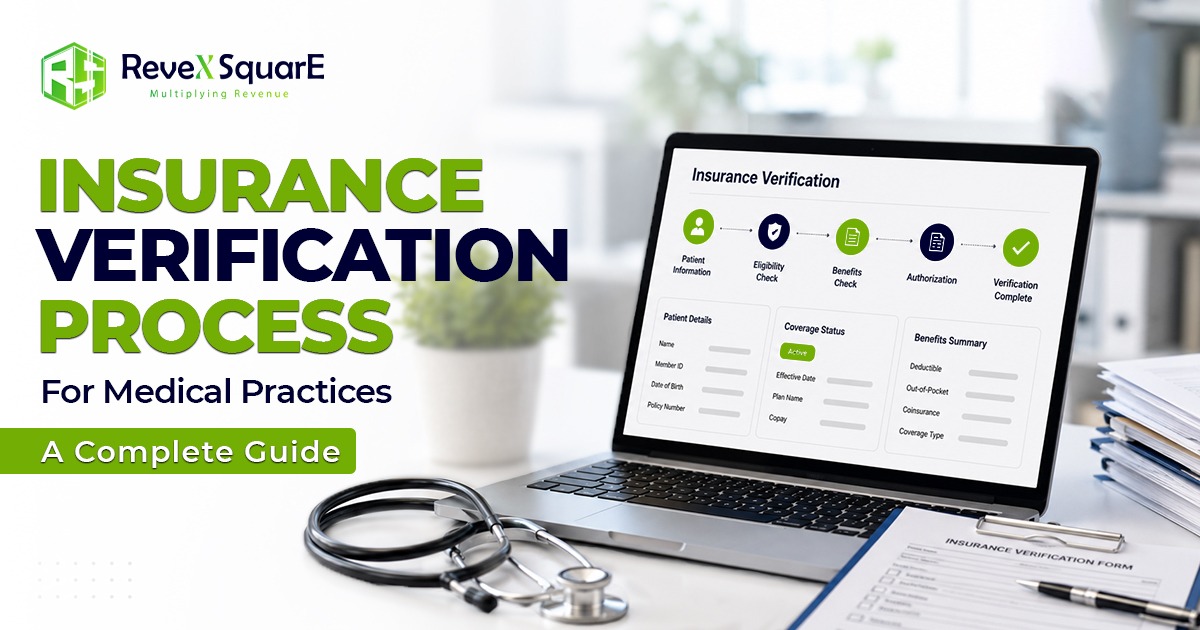
Insurance Verification Process for Medical Billing
Healthcare providers face increasing pressure to improve operational efficiency while maintaining high-quality patient care. One of the most important steps in the revenue cycle is the insurance verification process healthcare organizations use before delivering services. Although it may seem like a routine administrative task, insurance verification has a direct impact on claim approvals, reimbursement timelines, patient satisfaction, and overall financial performance.
When patient insurance information is not verified correctly, practices often experience denied claims, delayed payments, and unexpected patient billing issues. A structured insurance verification process helps prevent these challenges and supports a healthier revenue cycle.
In this guide, we’ll explain how the insurance verification process works, why it matters, common challenges providers face, and best practices for improving results.
What Is Insurance Verification?
Insurance verification is the process of confirming a patient’s insurance coverage and benefits before medical services are provided. The goal is to ensure that the patient’s insurance policy is active, determine what services are covered, identify any prior authorization requirements, and understand the patient’s financial responsibility.
A well-managed insurance verification process healthcare providers follow helps reduce errors at the front end of the revenue cycle. By identifying coverage issues early, medical practices can avoid costly billing problems later this is exactly the role dedicated eligibility verification services are built to play.
Insurance verification typically includes:
- Confirming active insurance coverage
- Checking effective dates
- Reviewing benefits and limitations
- Verifying deductibles and copayments
- Identifying prior authorization requirements
- Confirming referral requirements
- Validating patient demographic information
Why Insurance Verification Is Important
Insurance verification plays a critical role in revenue cycle management. Even small errors can lead to claim denials and payment delays.
Reduces Claim Denials
Many denied claims result from eligibility issues, inactive coverage, or missing authorizations. A thorough insurance verification process healthcare teams implement can significantly reduce these preventable denials, and it works hand-in-hand with strong denial management once claims are submitted.
Improves Cash Flow
When claims are submitted correctly the first time, reimbursements arrive faster. This helps practices maintain consistent cash flow and reduces accounts receivable balances.
Enhances Patient Experience
Patients appreciate transparency regarding their coverage, deductibles, and out-of-pocket expenses. Verifying insurance before appointments helps avoid billing surprises and supports clearer patient billing down the line.
Increases Clean Claim Rates
Clean claims are claims submitted without errors or missing information. Proper insurance verification improves claim accuracy and increases first-pass claim acceptance rates in medical coding and submission.
Step-by-Step Insurance Verification Process
Step 1: Collect Accurate Patient Information
The first step in the insurance verification process is gathering accurate patient information.
Key details include:
- Full legal name
- Date of birth
- Insurance carrier
- Policy number
- Group number
- Policyholder information
- Contact information
Front-desk staff should also obtain copies of insurance cards and verify demographic details during scheduling and check-in.
Step 2: Verify Insurance Eligibility
The next step is confirming that the patient’s insurance coverage is active.
During this stage, practices should verify the following:
- Coverage status
- Effective dates
- Plan type
- Network participation
- Coverage limitations
An effective insurance verification process healthcare providers use ensures eligibility is confirmed before services are rendered.
Step 3: Review Benefits and Coverage
Eligibility does not automatically mean a service is covered. Practices must review specific benefits to understand what the insurance plan will pay.
Important items to verify include:
- Deductibles
- Copayments
- Coinsurance
- Out-of-pocket maximums
- Covered services
- Coverage exclusions
Understanding these details allows providers to communicate financial responsibilities clearly to patients.
Step 4: Determine Prior Authorization Requirements
Many insurance plans require prior authorization for specific procedures, treatments, medications, or diagnostic services.
Failure to obtain authorization can result in claim denials even when the patient has active coverage.
As part of the insurance verification process, healthcare teams should identify authorization requirements early and complete necessary approvals before appointments.
Step 5: Confirm Referral Requirements
Some insurance plans require referrals before patients can see specialists.
Practices should verify:
- Whether referrals are required
- Referral validity dates
- Approved provider information
Missing referrals often lead to reimbursement delays and denied claims, similar to the credentialing gaps addressed through proper credentialing and enrollment.
Step 6: Document Verification Results
Every verification activity should be documented in the practice management system or electronic health record (EHR).
Documentation should include:
- Verification date
- Insurance representative information
- Confirmation number
- Benefits summary
- Authorization status
- Referral details
Accurate records support future billing and help resolve disputes if issues arise later.
Common Insurance Verification Challenges
Despite its importance, many practices struggle with insurance verification.
Frequent Coverage Changes
Patients often change insurance plans, employers, or coverage levels throughout the year. Outdated information can lead to rejected claims.
Incomplete Patient Information
Missing policy numbers, incorrect dates of birth, or inaccurate demographic details can delay verification efforts.
Complex Insurance Policies
Insurance plans vary significantly in their coverage rules and requirements. Staff members must stay informed about payer-specific guidelines.
Prior Authorization Delays
Authorization requirements continue to grow across many specialties. Delays in obtaining approvals can affect scheduling and reimbursement.
Administrative Burden
Manual verification processes consume valuable staff time. High patient volumes can make it difficult to maintain consistent verification standards, which is why many practices are outsourcing medical billing functions like this one entirely.
These challenges highlight why a structured insurance verification process healthcare organizations follow is essential for operational success.
Best Practices for Insurance Verification
Verify Coverage Before Every Visit
Insurance information should be verified before each appointment, especially for recurring patients. Coverage details can change at any time.
Verify Early
Ideally, verification should occur 48 to 72 hours before the scheduled appointment. This provides time to address any issues before the patient arrives.
Use Technology and Automation
Many healthcare organizations use eligibility verification software to automate portions of the process. Automation improves efficiency and reduces human error.
Train Front-End Staff
Front-desk and scheduling teams should receive ongoing training regarding insurance requirements, payer updates, and verification procedures.
Maintain Standardized Workflows
Creating a consistent workflow ensures every patient undergoes the same verification process. Standardization improves accuracy and accountability.
Monitor Verification Metrics
Practices should track:
- Eligibility-related denials
- First-pass claim rates
- Authorization turnaround times
- Registration accuracy rates
Monitoring performance helps identify opportunities for improvement the same core medical billing KPIs that reflect your practice’s overall revenue cycle health.
How Insurance Verification Supports Revenue Cycle Management
Insurance verification serves as the foundation of an effective revenue cycle.
A strong insurance verification process healthcare providers maintain can help
- Reduce claim denials
- Improve reimbursement speed
- Lower administrative costs
- Increase clean claim rates
- Improve patient satisfaction
- Strengthen cash flow
- Reduce days in accounts receivable
Because insurance verification occurs at the beginning of the patient journey, improvements in this area often produce benefits throughout the entire billing cycle, reinforcing the results your medical billing partner delivers downstream.
How Revex Square Can Help
Managing insurance verification internally can be time-consuming and resource-intensive. Many practices choose to outsource eligibility verification to experienced revenue cycle management professionals.
Revex Square provides comprehensive eligibility verification services designed to help healthcare organizations reduce denials and improve reimbursement outcomes.
Our team helps practices:
- Verify insurance coverage accurately
- Review benefits and eligibility
- Identify authorization requirements
- Reduce eligibility-related denials
- Improve clean claim rates
- Support overall revenue cycle performance
By implementing a reliable verification strategy, healthcare providers can focus more on patient care while improving financial results. You can also request a complimentary Payer Performance Audit to see exactly where eligibility gaps may be costing your practice revenue.
Conclusion
The insurance verification process is one of the most important components of healthcare revenue cycle management. Accurate verification helps providers confirm coverage, identify financial responsibilities, obtain necessary authorizations, and prevent avoidable claim denials.
A consistent insurance verification process healthcare organizations follow can improve cash flow, increase clean claim rates, enhance patient satisfaction, and strengthen overall operational efficiency.
For medical practices looking to optimize revenue cycle performance, investing in effective insurance verification is not just a best practice; it’s a business necessity.
FAQ:
What is the insurance verification process for medical practices?
The insurance verification process confirms a patient’s coverage, benefits, eligibility, and authorization requirements before services are provided.
Is there an insurance verification process for medical practices’ PDFs available?
Many healthcare organizations use PDF checklists and workflows to standardize insurance verification and reduce eligibility-related errors.
Can I find an insurance verification process for medical practices in a PPT?
Yes, insurance verification training presentations are commonly used to educate front-desk, billing, and revenue cycle staff.
What is the health insurance verification process for medical practices?
It involves verifying active coverage, benefits, deductibles, copays, referrals, and prior authorization requirements before patient visits.
Are there free medical insurance verification training courses online?
Yes, several healthcare training platforms offer free introductory courses covering insurance eligibility verification and revenue cycle basics.
What is insurance verification in medical billing?
Insurance verification is a critical medical billing function that helps prevent claim denials by confirming coverage and patient benefits before treatment.
What is insurance verification experience?
Insurance verification experience refers to the skills and knowledge required to verify patient eligibility, benefits, authorizations, and payer requirements accurately.
How do you verify insurance eligibility and benefits?
Insurance eligibility and benefits are verified through payer portals, clearinghouses, or direct communication with insurance companies.
What is the job description of an insurance verification specialist?
An insurance verification specialist confirms patient coverage, reviews benefits, obtains authorizations, updates records, and supports accurate claim submission.
Why is insurance verification important for medical practices?
Insurance verification helps reduce claim denials, improve cash flow, increase clean claim rates, and enhance the overall patient experience.
Contact us for further details